foods-to-avoid
Teething In Babies: Timeline, Signs, Foods To Avoid & Healthy Diet Tips For Parents
infant
4.3M views
14071720102156.png&w=64&q=75)


Published: 04 Jun 2022
Updated: 11 Mar 2026
The first stage of tooth development starts when the baby is still inside the womb, around the 6th week of gestation. When babies are born, they already have 20 primary teeth, commonly known as milk teeth, formed deep within their jaw bones. Gradually, the teeth start moving upwards and erupt from the gums. This process is called teething.
In most babies, the process starts around 6 months of age, but it can happen earlier as well. Although it is a very important milestone for babies, teething can cause discomfort and pain. This is the reason why your little one needs comfort and support to help them get through with little ease.
This phase can be a little confusing for the parents since babies are not able to express themselves. It is very important for you as a parent to look out for signs of teething and provide the right care and comfort during this stage.
Apart from all these, you also need to cut down certain foods from your baby’s diet as these can aggravate the discomfort. Continue reading to know more.
When Do Babies Start Teething?
Babies start developing milk teeth while they are still inside the womb; these start to erupt and become visible only around 6 months of age. However, it can happen anywhere between 4 to 7 months of age and even as early as 3 months.
The process typically starts with the lower central incisors, and the last ones to erupt are the lower and top second molars. So, by the time your baby is around 2 - 3 years old, all 20 milk teeth are visible.
The typical teething order in babies is
-
Lower central incisors around 3 - 10 months
-
Top central incisors around 8 - 12 months
-
Top lateral incisors around 9 - 13 months
-
Lower lateral incisors around 10 - 16 months
-
Top first molar around 13 - 19 months
-
Lower first molar around 14-18 months
-
Top canine teeth around 16-22 months
-
Lower canine teeth around 17-23 months
-
Lower second molar around 23-31 months
-
Top second molar around 25-33 months
Signs of Teething in Babies
When your baby’s teeth start erupting, they experience pain and discomfort. However, due to the lack of any major physical signs and their inability to express pain verbally, the symptoms are often overlooked by parents.
In order to be able to help your little one, it is important that you look out for the symptoms of teething, which include:
1. Excessive Drooling
If your baby has suddenly started to drool excessively, it could be due to teething as the process stimulates over production of saliva. Babies often drool more during teething because the eruption process stimulates saliva production.
2. Irritability and Crankiness
The pain and discomfort caused by teething can lead to crankiness and irritability. If your little one is more cranky or restless than usual, it is quite possible they are teething. Some babies may also become more clingy.
3. Swollen or Red Gums
If your little one’s gums seem swollen or red, it could be because their teeth are pushing through. This can be managed by giving your little one cold teething rings or by gently massaging their gums.
4. Chewing or Biting Objects
If your baby is chewing on random objects like toys, fingers, and even their blankets, it could be because they are teething. It is a completely natural behaviour, and they do it to reduce the pain and discomfort by applying counter pressure.
5. Reduced Appetite
Is your baby eating less than usual? It could possibly be linked to teething. Babies above 6 months of age may refuse solid foods. Although this is temporary, the sign should not be ignored.
6. Disturbed Sleep
In the majority of cases, teething can trigger sleep disruption in babies. This is primarily due to the pain and discomfort, which can make them restless. These symptoms intensify when the baby is lying flat. This can last for around 3 to 5 days
7. Runny Nose
Some babies may develop a mild runny nose, stuffy nose, or congestion when they are teething. It is possibly due to the inflammation around the teeth caused by the process. However, you need to be careful because if not teething, a runny nose is also a sign of infection.
8. Mild Fever
When teething, your baby may feel a little warm to the touch as there is a slight rise in their body temperature, around 100.4°F or 38°C. While it is not something to be worried about, it is important to keep a check and consult your pediatrician if the baby's temperature goes up.
9. Red or Flushed Cheeks
Red cheeks may look cute, but not when they are linked to teething, as the redness may be a result of gum inflammation or excessive drooling. The redness can be seen on both sides of the face and typically lasts for a week.
10. Loose Stools
While teething may not be a direct cause of loose stools, it can be caused by overfeeding, which your baby does to pacify themselves. It could also be a sign of infection since your baby is chewing on various objects.
Foods to Avoid When Baby Is Teething (6+ Months)
As your little one starts teething, their gums may become very sensitive, sometimes with tiny open areas and tissue inflammation. As such, it is important to avoid certain foods, which can aggravate the discomfort and irritation. These are:
1. Citrus Fruits
Avoid giving your little one citrus fruits like oranges and lemons, as these contain too much acid. Eating such foods can irritate their already sore gums, causing a burning or stinging sensation.
2. Tomatoes
Tomatoes are slightly acidic and have a tangy taste, which makes them a bad choice for teething babies. You should also avoid giving them foods that contain tomato or tomato sauce.
3. Spicy Foods
Spicy foods can irritate the open wounds and worsen the pain and discomfort. These should be strictly avoided for babies.
4. Salty Foods
Salts should be strictly avoided when your baby is teething because they can irritate the gums and cause an unbearable stinging sensation.
5. Frozen Foods
While giving cool foods can help ease the discomfort, frozen or cold foods may increase gum sensitivity. You can try mildly chilled foods.
Best Foods for Babies During Teething
Teething babies usually show a preference for soft and soothing foods. These include:
Fruit Purees
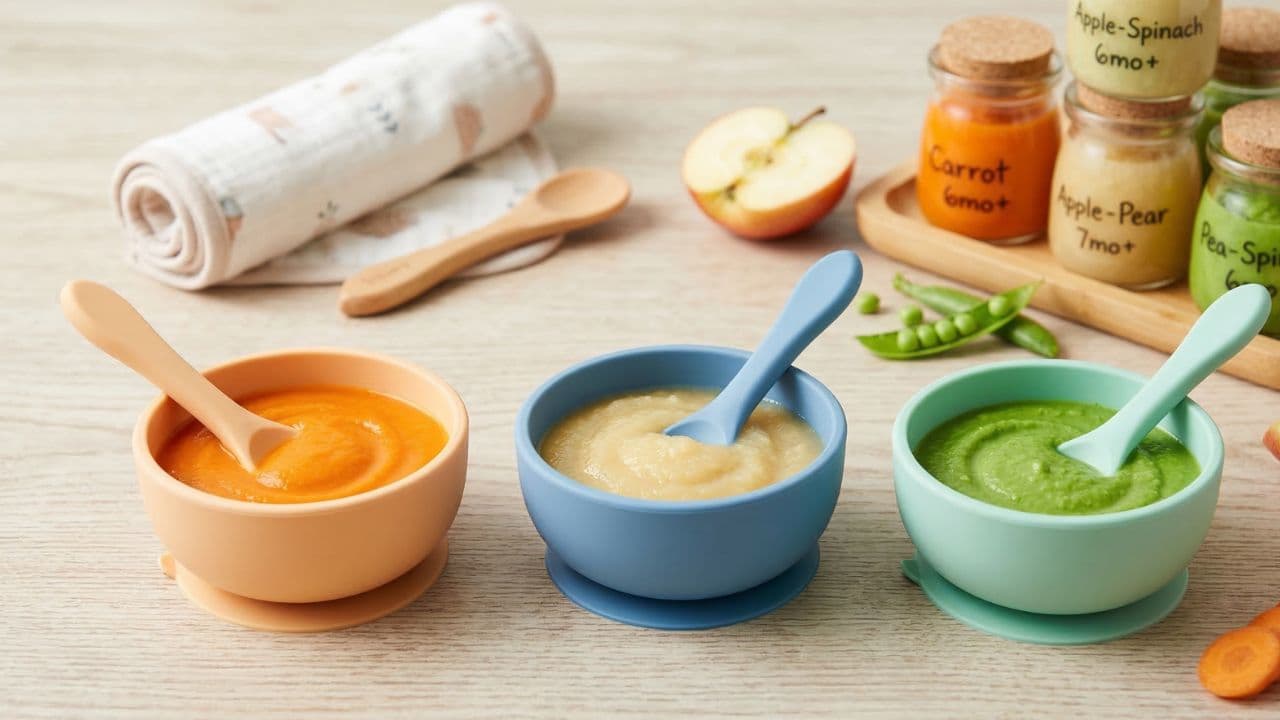
Soft purees made from fruits like bananas, apples, pear, or mangoes are the top choice as these are loaded with nutrition and gentle on the baby’s gums.
Vegetable Purees
Just like fruit purees, vegetable purees are also a great option for teething babies. Vegetables like carrots, pumpkin, sweet potato, and peas can be a great option.
Yogurt
Plain yogurt is a wonderful option because of its cool and soothing texture, and also because it provides calcium and protein.
Mashed Foods
Apart from purees, you can also try giving mashed foods like mashed banana and mashed avocado, as these are easy to eat.
Soups and Smoothies
Homemade vegetable soups or fruit smoothies are quite easy to swallow and are loaded with essential nutrients.
When your baby is teething, you need to increase their fluid intake and avoid force feeding them. Some babies tend to lose interest in food, but you need to ensure they are getting proper nutrition. Sometimes, reduced appetite can lead to temporary weight loss. Make sure you keep your doctor in the loop.
While the teething stage is temporary, it is very important and can cause discomfort and irritability. By recognizing the signs and taking a few measures, you can make the process much easier for your baby.
Your All-In-One Baby Toolkit
Monitor milestones, growth, and discover unique baby names easily

Be the first to support
Be the first to share