baby-massage
Umbilical Stump Care: What Is Normal, What Is Not
infant
955.8K views


Published: 21 Aug 2025
When the baby arrives, it brings loads of happiness to parent's world. And along with the excitement, it also comes with many little worries. One of the first things most new parents notice is the small piece of umbilical cord attached to their baby’s belly button. This is the umbilical stump.
First time parents usually feel nervous looking at it. They come up with a bunch of questions as they get worried if that will affect their baby’s health. And it is completely normal for parents to worry about it.
This blog will walk you through everything you need to know about umbilical stump care.
What Is the Umbilical Stump?
The umbilical cord is a connection between the baby and your placenta. It carries oxygen and nutrients from you to your baby. The cord is required only till the baby is born. After baby’s birth, doctors clamp and cut it. This leaves a small stump attached to your baby’s tummy.
This stump usually dries and falls off on its own within 1–3 weeks after birth. Until then, parents need to keep that area clean and dry.
What Is Normal With Umbilical Stump Healing?
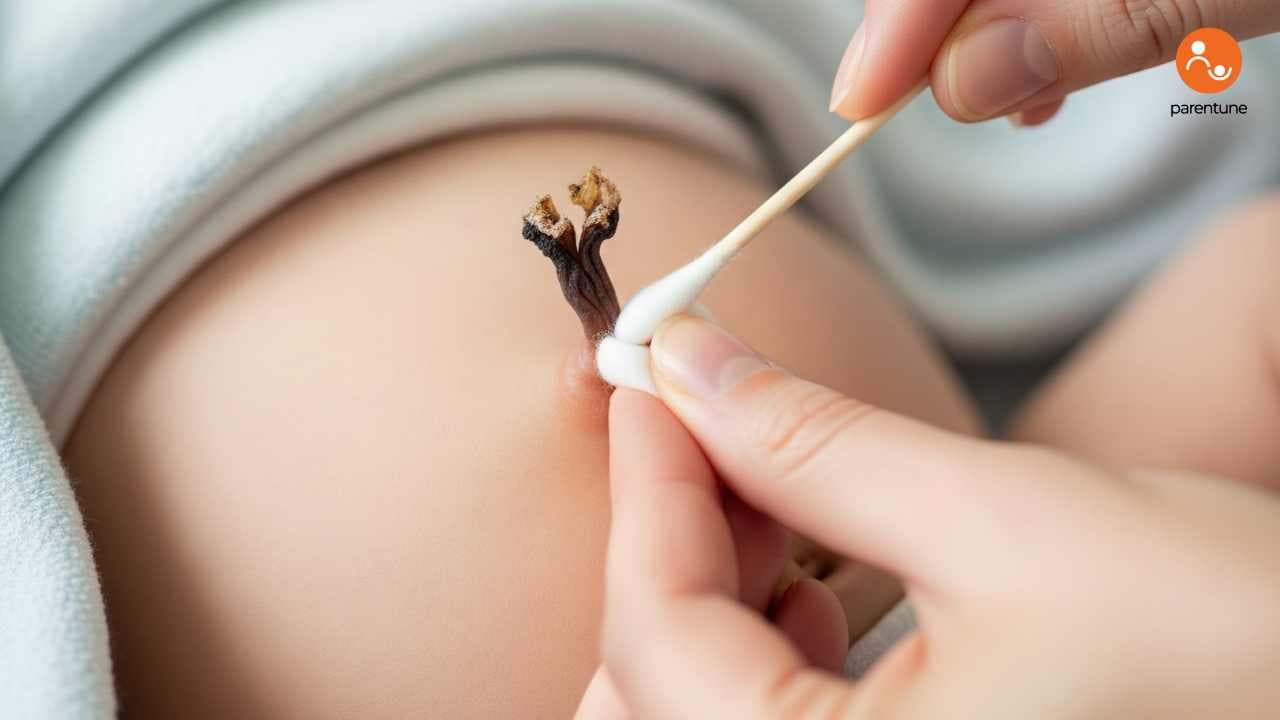
- You will see color changes. At first, the stump looks yellowish-green. As it dries, it turns brown or gray. And finally you will see it getting black before falling off. This is a natural process.
- The stump may look smaller and harder each day. That’s a sign it’s drying properly.
- You might notice a little bleeding on your baby’s diaper or clothes when the stump is about to fall. There is nothing to worry about it .
- A slight smell is also common as the stump dries.
- If you notice a sticky yellowish discharge, don’t worry. This is normal unless it becomes green or foul-smelling.
Recommended reads:
When to Worry About Umbilical Stump Healing
While most stumps heal without problems, sometimes there can be issues. Consult your paediatrician if you notice any of these
1) You see a redness and swelling around the stump. This may indicate infection.
2) It releases an unpleasant odour.
3) There is a Pus-like discharge which is usually yellow-green fluid in colour.
4) Continuous bleeding.
5) The baby is down with high fever.
6) The stum is not fallen off after 4 weeks.
How to Care for the Umbilical Stump
1. Keep It Dry
The stump heals faster when it’s dry. Avoid covering it tightly with the diaper. Fold the diaper down a little to let air reach it.
2. Sponge Baths Are Best
Until the stump falls off, give your baby sponge baths instead of soaking in water. Once it heals, you can switch to tub baths.
4. Dress Your Baby in Loose Clothes
Tight clothes can rub against the stump and irritate it.
5. Do Not Pull It Off
Even if the stump looks like it’s hanging by a thread, never try to pull it off. It will fall naturally when ready.
What Happens After the Stump Falls Off?
Once the stump falls off, the belly button area may look moist for a few days. Sometimes, you may see a small pinkish lump of tissue. This is a granuloma, which is usually harmless. It may ooze clear fluid, there is nothing to worry about. You can show it to your paediatrician who will apply an ointment so it heals faster.
If the belly button continues to ooze pus or smell bad, it’s time to check with the doctor..
Symptoms That Indicate You Need To See The Doctor Immediately
- If your baby develops a fever.
- If the skin around the stump is red, swollen, and warm.
- If there’s constant bleeding that soaks more than a small patch.
- If you notice thick, pus-like discharge with a strong smell.
- If the stump hasn’t fallen off after 4 weeks.
Taking care of your newborn’s umbilical stump is not as difficult as you thought. Most stumps heal perfectly on their own within a few weeks. This little phase will pass quickly, and soon you’ll only be left with your baby’s cute belly button.
Your All-In-One Baby Toolkit
Monitor milestones, growth, and discover unique baby names easily



Be the first to support
Be the first to share