speech-&-hearing
Delayed Speech In Children: Early Signs, Causes, And When To See A Doctor


Published: 24 Mar 2026
As parents, your baby's first words could be a sigh of relief for you. You know that they have already achieved a crucial milestone in their early development. Their initial babbling and cooing bring happiness and reassurance, reflecting your baby’s ability to communicate with their surroundings.
However, not all children reach these developmental milestones at the same time. Some minor speech delays in toddlers are expected, but if speech delays persist, parents may naturally feel concerned. Knowing the signs of delayed speech not only ensures timely treatment but also supports progress towards long-term recovery.
Quick Summary:
Some of the key signs of speech delay to watch for are:
-
Limited or no babbling by 9 to 10 months
-
Unable to say single words, like calling parents by 12 to 15 months
-
Finding it hard to follow instructions and respond within 18 months
-
Limited vocabulary by 2 years
-
Finds it hard to combine words to express feelings
-
Limited gestures to point things, or waving at others
What Does Delayed Speech Mean?
Delayed speech in toddlers and children is not as uncommon as people usually think. To explain simply, speech delay is a developmental lag in which a toddler or child either fails to or struggles to use sounds, words, and gestures to communicate effectively with others, often giving rise to the need for speech therapy.
Who Is Most Affected?
Delayed speech can affect toddlers and young children, but certain groups are at risk. Children who had a premature birth or have difficulties in hearing can experience delays in speech. Some children are naturally shy. These children may begin talking later in life or experience persistent delays in talking unless treated. Children living with autism and childhood psychological problems are also at a higher risk for speech delays.
How Common Is It?
In early childhood, speech delays are common developmental concerns. According to research reports, 6.2% of children experience speech delays. Boys are at a higher risk than girls of experiencing delayed speech and language development.
Common Signs and Symptoms
Delayed speech can be hard to notice at first because some children start talking later than most of their peers. However, parents should watch for early signs of delay and know when to seek help from professionals.
-
No babbling or limited use of sounds within 9 months
-
Unable to utter single words by 1 year
-
Lack of gestures like pointing, nodding, or waving hands by 9 to 10 months
-
Difficulty understanding simple instructions by 18 months
-
Limited vocabulary as compared to same-age peers
-
Finds it hard to imitate or repeat words or actions by 1 year
-
Cannot combine words for 2 years
-
Cannot frame sentences by 3 years
-
Rely on gestures to express feelings
-
Shows anger or irritation when forced to talk
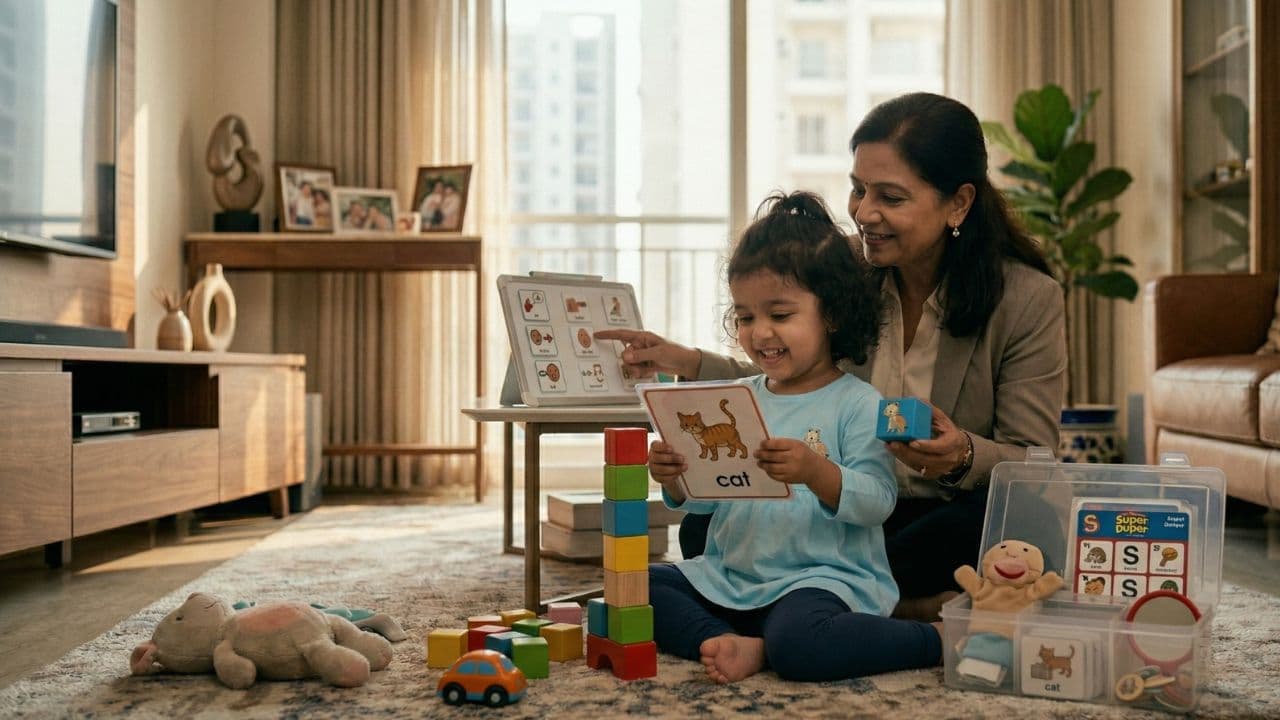
Speech Delay Signs By Age
Besides the general signs of delayed speech, it is important to recognize age-specific delays so that parents can stay informed about when to consult a specialist for assessment and treatment.
6 - 12 months
-
Eye contact is often limited and lacks non-verbal engagement
-
Never use gestures to point at things, reach out, or wave their hands
-
Limited interest in sounds or voices when spoken to them
12 - 24 months
-
Cannot use single-syllable words
-
Rarely imitates or follows others to communicate feelings
-
May find it hard to respond to one’s name consistently
-
Cannot understand simple words like ‘go’, ‘sit’, ‘bye’
-
Doesn’t understand simple sentences by 18 months
-
Cannot join syllables to frame words
-
Limited or very few meaningful words by 18 to 24 months
Preschooler
-
By age 2, they are unable to form simple two-word phrases
-
Even by age 3, vocabulary is poor, often less than 50 words
-
Their speech is unclear and hard for others to understand
-
Finds it difficult to form simple and meaningful sentences
-
Becomes irritated when trying to express their needs
You may also like:
What Is Normal vs. When to Worry
Not all children who begin late necessarily develop speech difficulties or developmental delays. It is important to note the differences between what's expected and when to worry about speech delay.
Usually Normal
-
Children develop speech at different rates
-
Late speakers often catch up
-
Mixing up words or mispronunciation is normal
-
Using more gestures and fewer words before 2 years is normal
-
Taking time to speak to strangers is common
-
Growing up in bilingual or multilingual homes can cause temporary speech delays
May Need Medical attention
-
No babbling or gestures by 1 year
-
Cannot combine two words by age two
-
Not saying anything by 18 months
-
Difficulty following words spoken by others
-
Cannot say meaningful words by 3 years
-
Loss of previously learned words
Causes or Triggers
Some of the causes of delayed speech are:
-
Children with hearing difficulties often struggle to understand spoken words and sentences
-
Brain or nerve-related illness can cause speech delays
-
Children living with autism, Down syndrome, or cerebral palsy may experience delayed speech
-
Problems with the tongue, lips, or cleft palate may lead to problems in sound formation
-
Premature birth and low birth weight babies may take longer to begin speech
-
When too much screen exposure takes the place of real conversations, delayed speech can occur
-
Limited talking at home with parents and siblings means less vocabulary to learn at home
-
Difficulties with chewing, sucking, or swallowing can affect speech, as the same muscles impact sound production and the use of words
What Parents Can Do At Home?
As a parent, you can try the following at home to help improve your child’s speech development.
-
Communicate more often - Parents should talk to their late-talking toddlers while doing activities together at home to help them learn sounds, words, and sentences.
-
Encourage communication: Ask them simple questions and let them reply to build their vocabulary.
-
Read stories to them - Listening to stories builds their vocabulary and helps them use new words while speaking.
-
Use gestures: Point to or show things with your hands. Non-verbal communication also supports understanding sounds and words through actions.
-
Play word games - With toddlers, parents can play games and help them learn and use new words.
-
Limit screen exposure - Help your child play outdoors and engage them in drawing or any other activity they enjoy. Limit screen exposure or stop it completely, as it hinders language development.
When to Seek Professional Help
If your child is missing speech milestones, it is a good idea to see a speech therapist or a pediatrician who can guide you on the next steps. A speech therapist will understand your child’s communication lag and will suggest remedies that work. If hearing problems are present, your child may be referred to an audiologist. It is important to seek professional help if symptoms persist and don’t get better over time.
Expert Insight
According to Dr. Ramalingam Kalyan, Principal Director, Paediatrics at Max Super Speciality Hospital, “No babbling by 9 months, not responding to their name, no gestures like pointing or waving by 12 months, and no two-word sentences by age 2 years are developmental red flags.”
All children show variations in their speech development. Some children begin speaking their first words before their first birthday, while others may start later than expected. Parents should monitor signs of delay and seek speech therapy for children if symptoms persist or worsen, so that timely treatment can begin the recovery process.
Your All-In-One Baby Toolkit
Monitor milestones, growth, and discover unique baby names easily




Frequently Asked Questions
Be the first to support
Be the first to share