developmental-milestones ...
Eye Colour In Babies: When And Why It Might Change
14071720102156.png&w=64&q=75)


Published: 10 Jul 2025
What your baby’s eyes are telling you—beyond genetics
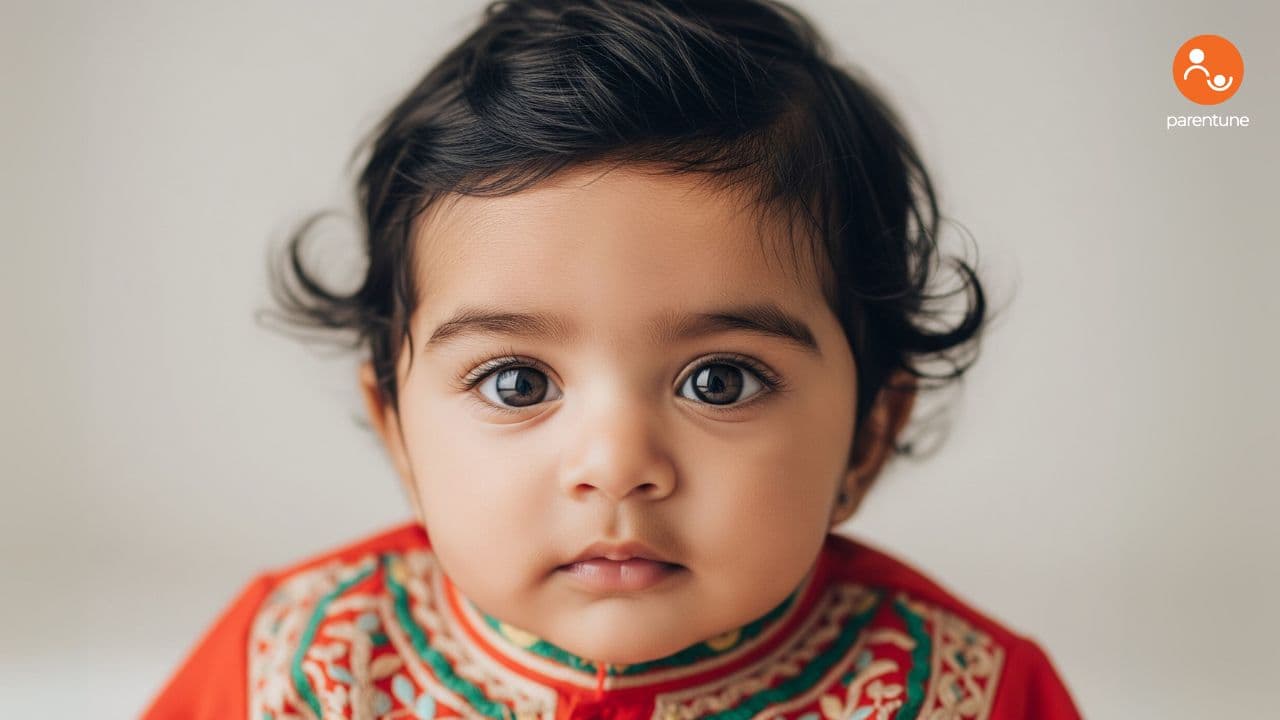
That striking newborn blue? It might not last.
You’ve probably heard it before—"All babies are born with blue eyes." Not quite true. But close enough to spark curiosity.
You gaze into your newborn’s eyes, wondering: Will they stay this colour forever?
That moment holds more mystery than most parents realize.
Let’s unpack it. Not with theories, but with a clear-eyed look at the science, the stories, and the subtle transformations hiding in plain sight.
Why Do So Many Babies Start With Blue Or Gray Eyes?
It’s not the eye colour—it’s the lack of pigment.
When babies are born, their melanocytes—the cells responsible for producing melanin—are still warming up. Melanin determines how dark the eyes (and skin, and hair) will be.
In those early days:
-
Less melanin = lighter eyes (blue, gray, light green)
-
More melanin = darker eyes (hazel, brown, black)
But here’s the twist:
Melanin production continues after birth. Sometimes for months. Sometimes for years.
What looks like blue today might slowly darken to hazel or brown by the time your baby blows out their first candle.
You may also like to read 7 Possible Causes Of Watery Eyes (Epiphora) In Babies
So When Does A Baby’s Eye Colour Actually Settle?
Think of it as a slow reveal—not a dramatic switch.
Most eye colour changes happen within:
-
6 to 9 months — noticeable shifts begin
-
By 12 months — eye colour stabilizes in many babies
-
By 3 years — the final “forever colour” tends to lock in
Still, exceptions exist. Some kids surprise everyone with a shade shift as late as age 5.
In parenting (and pigmentation), patience is a recurring theme.
The Hidden Role Of Genetics: It’s Not Just About Mom And Dad
Eye colour inheritance isn’t a coin toss. It’s a complex equation.
Yes, brown tends to dominate. But two brown-eyed parents can have a blue-eyed child.
And two blue-eyed parents? Less likely to have a brown-eyed baby, but not impossible.
Why?
Because multiple genes—at least 16 known ones—play a part. The most influential:
-
OCA2: controls melanin in the iris
-
HERC2: regulates OCA2 activity
Together, they determine the “melanin dial”—how much pigment gets produced and when.
So it’s not about whose eyes are stronger.
It’s about how your child’s DNA lights up that hidden pigment machinery.
What Exactly Causes The Colour To Change?
Melanocyte activity increases with time and light exposure.
Here’s the natural sequence:
-
Born with limited melanin
-
Exposed to light post-birth
-
Melanocytes slowly produce pigment
-
Eye colour shifts over weeks or months
Light acts like a switch.
It tells melanocytes: Time to get to work.
It’s why some preemies experience even slower colour change—they’ve spent less time in a world with sunlight.
What Eye Colour Changes Are Considered Normal?
Gradual changes? Normal. Sudden or asymmetrical changes? Time to check.
Most babies follow a slow, symmetrical path:
-
Both eyes shift from blue/gray to green/hazel/brown at the same pace
-
The colour deepens gradually—not overnight
But watch for signs like:
-
Only one eye changing
-
Cloudiness or white spots
-
Rapid shifts past toddlerhood
These may indicate a medical condition—like heterochromia, cataracts, or pigment disorders—and are worth discussing with your pediatrician.
As a rule of thumb:
Steady is safe. Sudden deserves attention.
Do Eye Colour Changes Say Anything About Health?
Usually no—but they can serve as early signals.
While most eye colour changes are harmless, in rare cases they might point to:
-
Albinism: very low melanin across eyes, skin, hair
-
Waardenburg syndrome: pigment-related hearing/eye condition
-
Juvenile glaucoma: cloudiness or light sensitivity in one or both eyes
This isn’t to worry you.
It’s to help you know what’s worth watching.
What If Your Baby Has Two Different Eye Colours?
It’s rare—but not always a problem.
This is called heterochromia. It can be:
-
Genetic (just how your baby is wired)
-
Acquired (resulting from injury, trauma, or medical issues)
If it’s been there since birth and doesn’t change over time?
Most pediatricians will simply monitor it and move on.
Some children just grow up with eyes that tell two different stories. And that’s beautiful.
How Does This Connect To Other Traits—Like Hair Or Skin Colour?
Melanin is the shared thread.
The same pigment that changes eye colour also influences:
-
Skin tone
-
Hair colour
-
Sensitivity to sunlight
So if your baby starts with fair skin and light hair, you might see deeper tones emerge in all three areas over time.
Eye colour isn’t acting alone.
It’s part of a coordinated developmental dance.
If you loved reading this blog, you may also like:
How To Prepare For Your Baby's First Bath?
Should Parents Try To Predict Eye Colour?
You can guess. But don’t bet the house.
There are online calculators that claim to predict baby eye colour based on parental genetics.
They’re fun. But not flawless.
The truth?
-
Genes skip generations
-
Recessive traits resurface
-
Environment plays a role
So take the guesses lightly—and enjoy the journey instead. That moment of “look how their eyes are changing!” is a rite of passage in itself.
So What’s The Big Picture? Why Does This Matter?
Because watching your baby grow isn’t just about milestones.
It’s about moments of wonder.
That hazy blue turning hazel?
That flicker of green surfacing around 7 months?
These aren’t cosmetic footnotes.
They’re nature’s quiet reminders: growth happens in layers. And your child is still becoming.
From Curiosity To Connection: What Parents Often Discover
Here’s the real insight:
Watching your baby’s eye colour change teaches you something, too.
It reminds us:
-
Change is subtle, but constant
-
Patience is part of parenting
-
Every child is unfolding in their own time
This is where platforms like Parentune matter.
Because you’re not the only one wondering why your baby’s eyes look different this week.
Thousands of parents are asking the same thing—Is this normal? What should I expect?
Parentune isn’t just a content hub. It’s a community where peer stories and expert answers coexist.
So whether your baby’s eyes stay blue or go brown—
You’ve got people walking this journey with you.
Final Thought
Eye colour is less about what you see and more about what’s still coming.
In parenting, as in pigment, the real transformation takes time.
So lean into the mystery.
Celebrate the change.
And know this: every shade tells a story.
Your All-In-One Baby Toolkit
Monitor milestones, growth, and discover unique baby names easily
Be the first to support
Be the first to share