medical
Fever In Babies: What Temperature Is Not Normal & When To See A Doctor


Published: 16 Mar 2026
Fever in babies is common, yet parents often worry when they notice warm little hands or a slightly hotter forehead. While fever is not a disease, it often indicates an underlying illness.
Because babies' immune systems are still developing, their body temperature may rise above normal when their bodies are fighting even a minor infection.
Not all fevers are equally concerning. Mild fevers subside on their own with proper care in a few days, while higher temperatures may require assessing other symptoms for timely treatment. Parents need to understand when to worry about baby fever, depending on the baby's age, other symptoms, and the duration of the fever.
Quick Summary:
Some of the key signs to watch for if your baby is having a fever are:
-
Warm forehead, hands, or body
-
Baby appearing sick
-
The temperature is above normal when measured
-
Unusually cranky
-
Refusing feeds
-
Unable to sleep well or oversleeping
-
Chills
What Is Fever?
Fever is a state in which body temperature exceeds the normal range of 98.6 ℉. It is a temporary condition that signifies that the body is fighting germs or an illness. In babies and children, a temperature of 100.4℉ or higher when measured rectally is generally accepted as a fever. Fever can be either low-grade or high-grade. Temperatures between 100.4℉ and a little above are low-grade, but when the temperature soars to 102.2℉ or above, it's a high fever.
Who Is Most Affected?
Fever can happen to babies of all age groups; however, it may feel especially overwhelming if your baby is below 3 months old. Infants below 3 months have immature immune systems, and a mild fever also requires proper evaluation. If babies are born with low birth weight or have complications during or just after birth, they are also vulnerable to infections. For them, mild fevers need to be treated with utmost care.
How Common Is It?
Fever in babies is a common condition for which parents may rush to the doctor’s clinic for consultations. Research indicates that 70% of childhood illnesses have fever as the primary symptom. Sometimes seasonal changes and a mild cold can trigger the immune system, leading to a fever. Viral infections during the monsoon can commonly cause fevers.
Why does it happen?
As already mentioned, fever is not a disease in itself. It signifies an illness or a bodily condition that the immune system is trying to fight. Fever stimulates the body’s natural defenses against diseases and infections.
Similar Reads:
Common Signs And Symptoms Of Fever In Babies
During a fever, your baby may appear pale and less energetic than usual. How fever in babies looks like in everyday life becomes clear by understanding the early signs and recognizing its progression before full recovery.
Early Signs
-
Slightly warm forehead, hands, and body
-
Reduced interest in breastfeeding
-
Fussiness and irritability
-
Less energy to do activities
-
Sleeping more often
Moderate Symptoms
-
Noticeable warmth in the body showing 100.4℉ or more
-
Persistently crying or clinging to the parent
-
Shivering
-
Refuses to get fed
-
Vomiting or upset stomach
-
Cough, cold, or nasal congestion
Severe or Urgent Warning Signs
-
Fever in babies under 3 months or a little older
-
Temperature 102℉ or above
-
Breathing difficulties
-
Extreme drowsiness
-
Seizures
-
Continuous loose motion or vomiting
-
Fewer wet diapers may suggest signs of dehydration
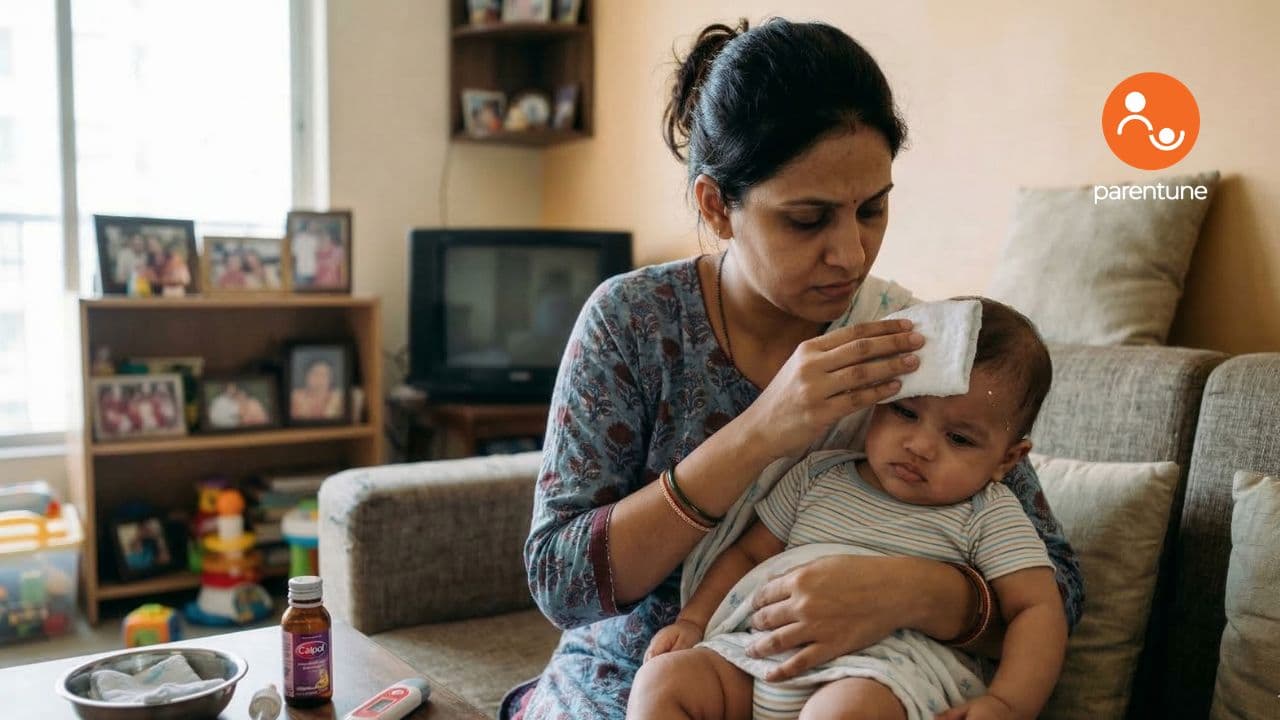
High-Grade Fever Vs. Low-Grade Fever
Parents need to be able to differentiate between a less worrisome fever and a concerning one so that prompt treatment can be given to the baby without delay.
What Is Considered Less Concerning?
If your baby has a less concerning fever, their usual physical signs and behavior would be:
-
The temperature is slightly above normal body temperature
-
They appear playful, responsive, and active
-
Makes eye contact
-
Mildly fussy at times
-
Feeding is slightly
-
Fever improves with medication and home remedies
-
Fever is due to a mild cold or a vaccination shot
When To Worry?
Fever can be a cause of concern if:
-
Newborn baby or baby below 3 months
-
Temperature above 102℉
-
Persistent fever lasting more than 3 days
-
Baby appears pale, fussy, and weak
-
Having breathing difficulties
-
Refusing to be fed
-
Infections getting worse
Age-Specific Differences In Fever In Babies
Fever shows up differently for babies in their first year.
Newborn (0-3 months): Even a mild fever should be assessed properly. The symptoms can be subtle but may indicate infection. The baby refuses to fee, sleeps more, and appears sick.
3 - 6 months: At this stage, fevers can occur due to vaccinations or viral infections. If the fever persists for more than a day, it is advisable to visit a doctor for proper medical monitoring.
6 - 12 months: Babies become more active at this stage. They may explore their surroundings and might pick up infections quickly. This may cause a fever that ranges from mild to high-grade. Your baby may show signs of a stomach infection, cough, or cold. Consulting a doctor is important if the fever is high or persists for 1-2 days.
Causes And Triggers
Infections: This is a common reason why babies may develop a fever. Infections can be viral, bacterial, and, less commonly, fungal. With infections, the fever can be either mild or severe.
Post vaccination: Mild fever may occur after an immunization shot. Usually, the fever is mild and subsides without much treatment. Sometimes, doctors may suggest fever medications for relief.
Exposure to heat: During summer, if the outside temperature is high and you dress your baby in layers, their body may feel warm and hot after a while. Overdressing traps body heat, leading to a spike in temperature.
Paediatrician Recommended Fever Care
At home, parents can monitor fever by regularly measuring it to prevent worsening symptoms and decide when to seek medical evaluation at the hospital.
-
Check the temperature every 2 to 3 hours
-
Parents can maintain a baby's temperature chart to show to the doctor
-
Keep your baby hydrated with breast mild
-
Avoid overdressing babies when they have a fever
-
Give fever medication by consulting the pediatrician
-
Watch for other signs of illness like vomiting, loose motion, cough and cold, and skin rashes
When to seek Professional Help?
Visiting a doctor becomes a necessity if:
-
Symptoms persist for more than 2 days
-
Baby refuses feed and appears dehydrated
-
Breathing difficulties
-
The baby appears dull and pale, is less active, and sleeps more
-
If temperatures cross 102℉ for babies above 3 months
-
Fever in a newborn, even if it is mild
Expert Insight Section
Dr. Deepa Aggarwal (child specialist) emphasizes, “If a child has a fever, do not wait to show them to a doctor… by the time you reach the doctor, the fever can increase and become harder to bring down.”
Fevers are not always bad. In most cases, fevers help the body naturally fight infections. However, close monitoring of the baby’s overall health condition is important to avoid complications and seek timely treatment.
Your All-In-One Baby Toolkit
Monitor milestones, growth, and discover unique baby names easily
Frequently Asked Questions
Be the first to support
Be the first to share