birthing---delivery
C-Section Recovery Timeline: What’s Normal And What’s Not
14071720102156.png&w=64&q=75)


Published: 05 Aug 2025
The hardest part of a C-section isn’t always the surgery. It’s the recovery no one warns you about.
Let’s begin where most conversations don’t: the hospital discharge. That moment when you’re wheeled out with a newborn in your arms… and a healing wound in your abdomen. You’re expected to be both superhero and patient. Resting while breastfeeding. Healing while hosting visitors.
So what does recovery actually look like?
And more importantly, how do you know what’s normal—and what’s a red flag?
This is your real-world guide.
What’s The Average Recovery Time For A C-Section?
Spoiler: It’s not just 6 weeks.
Technically, most doctors say you can expect 6 to 8 weeks for full physical recovery.
But here’s the hidden truth: parts of your body may bounce back sooner. Others take longer.
-
Skin incision heals on the surface within 1–2 weeks.
-
Internal stitches? They dissolve over 6–12 weeks.
-
Core strength takes 3–6 months to rebuild.
-
Emotional recovery? Sometimes longer than the body.
That’s why recovery is not a fixed finish line. It’s a moving range, shaped by how you rest, feed, sleep, bleed, and cope.
Recommended Reads:
Week-by-Week Breakdown: What To Expect
Week 1: The Hardest Days
-
Pain, soreness, and tenderness at the incision site
-
Bleeding (lochia), like a heavy period
-
Difficulty standing straight or walking
-
Trouble with bowel movements and gas pain
-
Sleep deprivation and emotional swings
You’ll likely be on pain meds and stool softeners. Support is not optional—someone must help you lift the baby, manage meals, and change pads.
The first week is not the time to prove you’re strong. It’s the time to let others hold you while you hold the baby.
Week 2–3: Getting Your Bearings
-
Swelling starts to go down
-
You can walk a little more without as much pain
-
Lochia changes from red to brown
-
Stitches or staples might be removed (if not dissolvable)
-
You may start itching as the incision heals
Still, lifting anything heavier than your baby? Not advised.
You may also feel mentally foggy—thanks to hormone shifts and sleep debt.
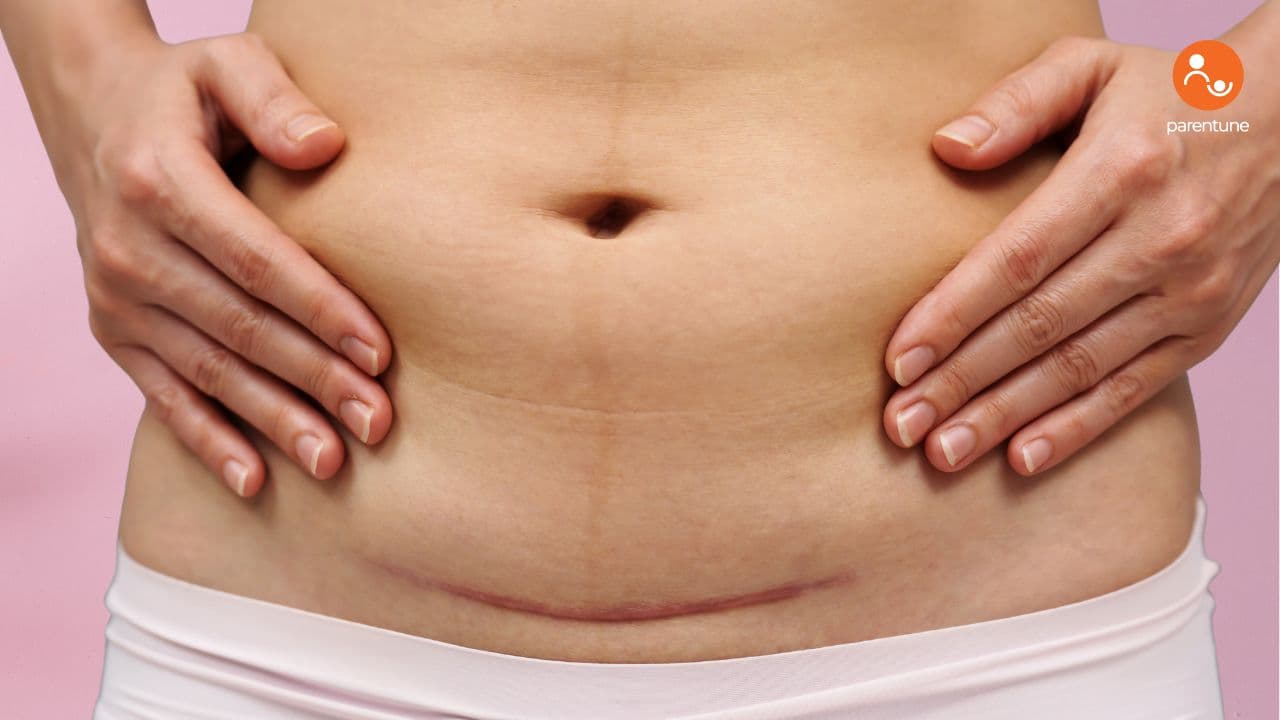
Week 4–5: Turning a Corner
-
Pain becomes dull or occasional
-
You might be able to sit or stand for longer stretches
-
Many moms start driving again (with doctor’s approval)
-
Bleeding tapers off
But don’t be surprised by energy crashes. Healing still takes a toll. Your scar may feel tight or numb—both are common.
Week 6–8: Medical Milestone (But Not the Finish Line)
This is when most OBs give you the green light:
-
To resume light exercise (like walking or yoga)
-
To start intercourse again (if emotionally ready)
-
To lift more weight or resume housework
But listen to your body. Just because it’s cleared doesn’t mean it’s fully ready.
What’s Not Normal After A C-Section?
Some signs are subtle. Others are urgent.
Here’s what to watch for:
1. High Fever (Over 100.4°F / 38°C)
Could indicate an infection—especially around your incision or uterus.
2. Redness, Pus, or Foul Odor at the Incision Site
Any oozing, swelling, or spreading redness needs immediate attention.
3. Heavy Bleeding After Week 2
If you’re still soaking pads every hour, something’s off. Bleeding should taper by week 2–3.
4. Sudden Pain After It Had Subsided
Sharp, stabbing pain—especially after you’d been improving—could mean internal issues or hernia.
5. Blood Clots in Legs or Shortness of Breath
Warning signs for a serious but rare complication: blood clots or pulmonary embolism.
6. Persistent Sadness or Detachment
Postpartum depression can show up subtly: crying easily, feeling numb, or feeling like a “bad mom.”
Parentune has seen thousands of parents in its community speak about these emotional aftershocks—and the healing that happens when you finally talk about it.
Sex, Sleep, And Scars: Other Things No One Tells You
Sex May Not Feel the Same Immediately
Even with clearance at 6 weeks, many mothers don’t feel emotionally or physically ready. And that’s okay.
Lubrication, libido, and comfort all shift post-birth—especially if you're breastfeeding.
Sleep Is Fragmented—But So Is Healing
Your body rebuilds tissue and repairs muscles when you sleep. So rest is not indulgent. It’s the most productive thing you can do.
If night feeds break that cycle, nap when someone else holds the baby—even for 30 minutes.
Scars Carry Memory—and Sometimes Pain
C-section scars can itch, sting, or go numb. Massage after 6 weeks (with doctor approval) can help release scar tissue and improve sensation.
But sometimes the scar is not just on the body.
Some mothers grieve the birth they didn’t have. That doesn’t make you ungrateful. It makes you human.
When To Call The Doctor Vs. When To Trust The Process
A good rule of thumb:
-
If symptoms worsen instead of improve → Call
-
If something feels “off” even without obvious symptoms → Call
-
If pain, swelling, or bleeding increase after decreasing → Call
-
If you’re anxious, overwhelmed, or unsure → Ask your doctor or ask your community
Platforms like Parentune exist for these moments—when you just need to say, “Has anyone else felt this?” and hear back, “Yes, and here’s what helped.”
You may also like to read:
How To Support Your Recovery: 5 Smart Systems
Healing is not just about rest. It’s about resourcing.
Here’s how to make recovery smoother:
-
Meal Rotation: Freeze meals or rotate cooking with friends/family to save time and energy.
-
Baby Stations: Create mini setups for diapers, wipes, and burp cloths in multiple rooms.
-
Pain Management Log: Note when you took meds to avoid overdose or gaps.
-
Digital Limits: Cut screen time during late feeds—blue light impacts sleep.
-
Support Network: Join a trusted parenting forum like Parentune, where real parents share real advice (minus the judgment).
The Bigger Truth Behind The Timeline
There’s no single “right” pace for C-section recovery.
One mom is back on her feet in 4 weeks. Another takes 12. Both are valid.
Healing is not a race. It’s a relationship—with your body, your baby, and your new identity.
If there’s one thing to remember, it’s this:
Your C-section story doesn’t make you less of a mother. It makes you more of a warrior.
Parentune’s Promise:
You’re not meant to figure this out alone.
Whether it’s your first child or your third, whether the scar is fresh or years old—our expert-backed guides, peer stories, and parenting community are built to support your version of recovery.
Your All-In-One Baby Toolkit
Monitor milestones, growth, and discover unique baby names easily




Be the first to support
Be the first to share