medical
Do You Have A Period While Pregnant? Rare Cases Explained
pregnancy
1.1M views
14071720102156.png&w=64&q=75)


Published: 11 Jul 2025
It starts with confusion.
You’re pregnant. You’ve taken the test. You’ve started the prenatal vitamins. Maybe even told your partner or your mom.
And then—bleeding.
Just like a period.
But how can that be?
This is one of those questions that keeps parents up at night—not just out of worry, but out of sheer disbelief. Because everything we’ve been taught about biology tells us the same thing:
Pregnancy and periods don’t mix.
But as with most things in parenting and the human body, the truth is more layered. Not contradictory—just more nuanced.
Can You Really Have A Period While Pregnant?
The short answer: No. Not a real period.
A true menstrual period means the body is shedding the uterine lining because there was no pregnancy. Once an egg is fertilized and implants in the uterus, that lining needs to stay intact to support the growing embryo.
So, if you’re pregnant, your body isn't supposed to trigger menstruation.
But here’s the twist:
Some women do experience bleeding that looks and feels like a period in early pregnancy.
Then What Is This Bleeding?
Let’s name the usual suspects. Most of them show up in the first trimester:
1. Implantation Bleeding
Happens when the fertilized egg burrows into the uterine wall—usually around 6–12 days after ovulation.
-
It’s usually lighter than a period
-
Often pinkish or brownish
-
Lasts a few hours to a couple of days
Not all women get it. But when they do, it’s easy to mistake it for a mini-period.
2. Breakthrough Bleeding
This one mimics your period’s timing. It can happen when your body would have had a period if you weren’t pregnant.
Why? Hormones haven’t quite adjusted yet. The body’s still in “monthly mode.”
You might see:
-
Light spotting
-
Cramping that feels familiar
-
Bleeding that happens once and doesn’t return
It’s unsettling, but not always dangerous.
3. Cervical Sensitivity Bleeding
Pregnancy makes your cervix extra sensitive—thanks to increased blood flow.
So after a Pap smear, sex, or even a rough bowel movement, you might see light spotting.
It’s not a sign of miscarriage. It’s just your cervix doing what it does: responding to change.
4. Subchorionic Hemorrhage
This one can be more serious. It’s bleeding under the placenta or fetal membranes.
-
Often seen in ultrasound
-
May come with clots or heavier flow
-
Needs monitoring
But even then, many pregnancies go on to be completely healthy.
Top picks for you:
What Does Pregnancy Bleeding Look Like Compared To A Period?
A few common patterns stand out:
|
Period |
Pregnancy-Related Bleeding |
|
Starts heavy, then tapers |
Starts light, may come and go |
|
Bright red, consistent flow |
Brownish or pink, sporadic spotting |
|
Lasts 4–7 days |
Often shorter—1 to 3 days |
|
Comes with PMS symptoms |
May include nausea, breast tenderness |
Think of it like this: Periods are rhythm. Pregnancy bleeding is interruption.
The patterns don’t line up. And that’s usually the first clue.
When Should You Be Concerned?
Not all bleeding means something is wrong. But some red flags do exist:
-
Heavy bleeding (soaking pads)
-
Severe cramping
-
Clots
-
Back pain
-
Bleeding with dizziness or weakness
In these cases, the most important rule is simple:
Don’t wait. Call your OB or midwife immediately.
In the first trimester, bleeding could signal:
-
Threatened miscarriage
-
Ectopic pregnancy (especially with pain on one side)
-
Molar pregnancy (very rare)
And in later trimesters, bleeding could point to:
-
Placenta previa
-
Placental abruption
-
Preterm labor
In short: Bleeding needs a conversation. Not a guess.
Also Read:
Real Stories, Real Relief
One of the most Googled questions by newly pregnant moms on Parentune last year?
“I’m bleeding but I’m pregnant. Am I losing the baby?”
That question gets asked not just in clinics—but in kitchen whispers, late-night WhatsApp messages, and among close friends.
Here’s what one Parentune community member shared:
“I thought I was having my period again and panicked. But my doctor said it was implantation bleeding. I’m now in my third trimester. Baby’s kicking as I write this.”
These shared stories matter. Because feeling less alone is often the first step to feeling safe.
And that’s what platforms like Parentune are built for—not just information, but validation. From people who’ve been through it. From experts who’ve seen it all.
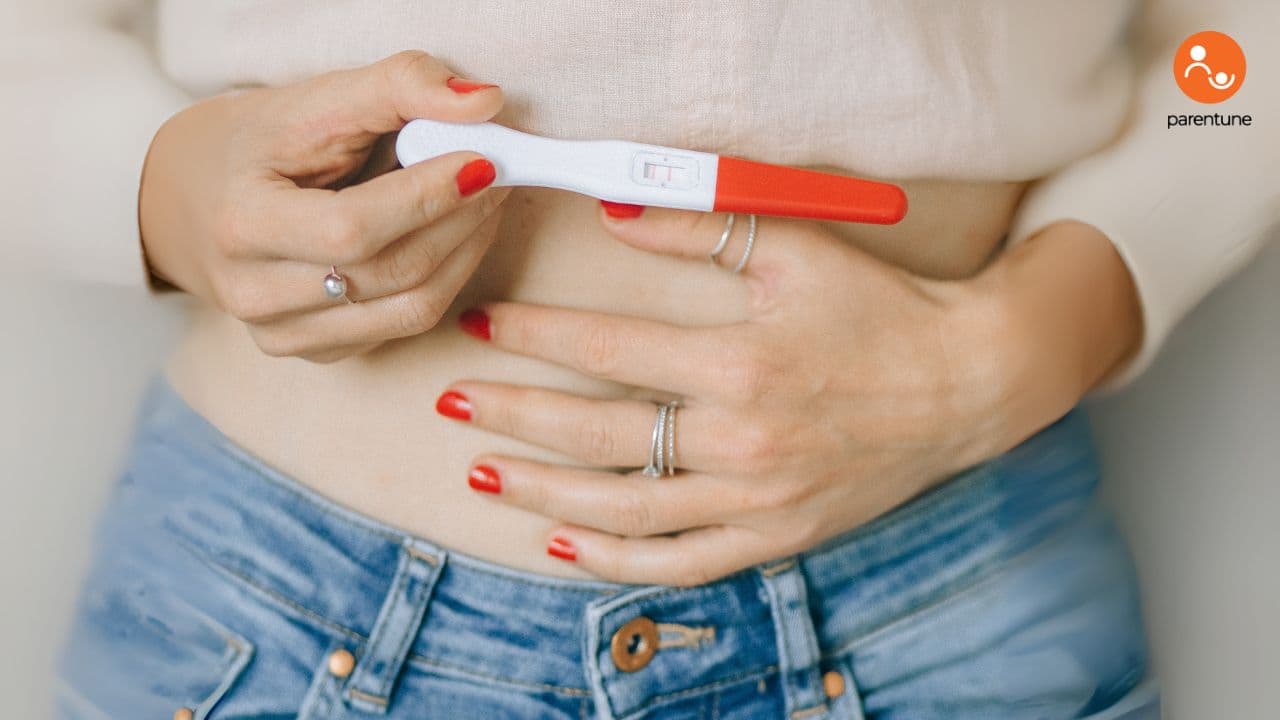
So Why Does This Myth Persist—That You Can Have A Period While Pregnant?
Because the experience feels like a period.
And because the internet is a jungle. It’s filled with forums and social posts that say, “I had a full period and didn’t know I was pregnant!”
In some rare cases—extremely rare—bleeding continues through pregnancy. Sometimes monthly. Sometimes mimicking menstrual cycles.
But most of those stories fall into three buckets:
-
Breakthrough bleeding mistaken for periods
-
Decidual bleeding (where parts of the uterine lining still shed)
-
Unaware pregnancies until late—where pregnancy signs are missed or misread
The rule of thumb: If you’re bleeding and pregnant, it’s not a period—it’s something else.
How Should Expectant Moms Think About This?
Start with clarity. Then move toward community.
-
Know what’s normal-ish – Light spotting in early pregnancy isn’t rare.
-
Don’t self-diagnose – Call your doctor, not Google.
-
Lean on real voices – Communities like Parentune offer not just facts, but comfort.
Pregnancy comes with enough unknowns. You don’t need to carry them alone.
The Takeaway
You can’t have a true period while pregnant.
But you can experience bleeding—sometimes benign, sometimes a warning sign.
And in those moments, what you need is not just an answer. You need a pattern. A system. A path forward.
That’s where expert-backed parenting communities like Parentune step in. Not to give you generic advice, but to give you context. Support. And stories that sound a lot like yours.
Because in parenting—especially early on—what you’re really searching for isn’t always a diagnosis.
It’s reassurance
Your All-In-One Baby Toolkit
Monitor milestones, growth, and discover unique baby names easily



Be the first to support
Be the first to share