story-behind-it
Richa Chadha Makes A Case For Offline Childhood

Published: 27 Feb 2026
Updated: 02 Mar 2026
Last year marked a series of milestones for actor Richa Chadha. In January 2024, her production company - Pushing Buttons Studios - founded alongside her husband, actor Ali Fazal, released the Indo-French co-production Girls Will Be Girls to international acclaim. With both partners drawing from the rich depths of industry experience, the film's success felt almost predestined; the film quickly garnered both acclaim and awards across the entertainment world, mirroring Chadha's own season of personal evolution. By July 2024, she and Fazal had welcomed their baby girl, Zuneyra; a chapter Chadha describes as "fairly relaxed, even though I was working".
Raising a child takes a village
There's a quiet tenderness in the way Chadha navigates talk of motherhood and movie-making, toggling between the two with the kind of poise that belies her novice status in both arenas. She attributes this grace to the supportive teams around her. "I was handling post production for a film and taking it to festivals while also promoting Heeramandi at the time (she was seven months pregnant while doing so)," she recalls. "But the teams were really supportive and it all worked out." Chadha believes that being in India helps since raising a child becomes a community effort, one that comes naturally to us as a population. "My family has been a big blessing because when I found out that I was pregnant, my parents who were retired and living in Chandigarh, moved to Bombay to be close to me and the baby. In the initial bits, it's been a great help to me as I've slowly gotten back to work. When I'm at a shoot, I have my nanny or jhappa, who is around to help and I love her. Ali's father and his uncle and aunty who are in the city have also visited us. That's one thing we have in India, a community to raise a child. Even chatting with mothers really helps, whether that's in person or on WhatsApp groups. Older mothers can also help guide you."
Careers don't have to take a backseat during parenting
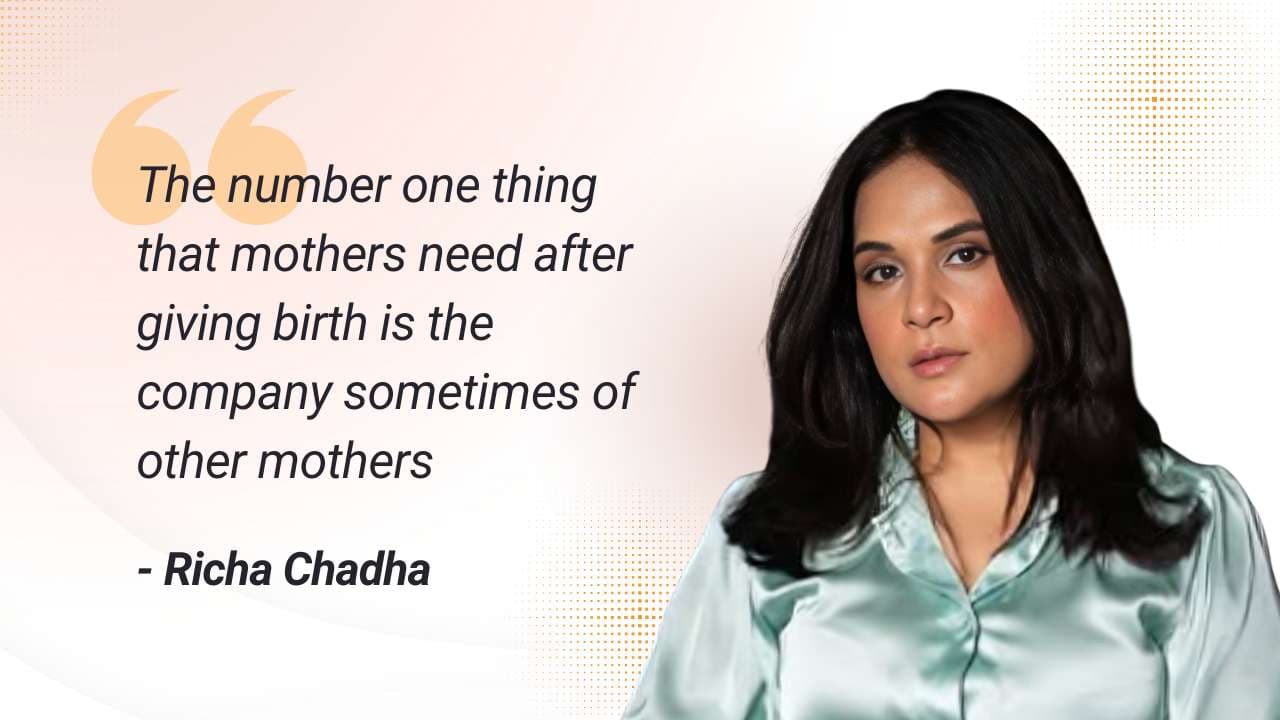
Chadha is assertive of the fact that career ambitions and motherhood needn't clash. "I say this to indicate that women can work through very late in their pregnancy, if their doctor allows them to do so. They can even do work that makes them move around or wear heavy clothes. It's the post delivery where women need the most support and help," she says, rightfully and adamantly doubling down on her stance of pregnant women being powerhouses, not the fragile identity that society stamps on them.
Postnatal development
When conversation turns to postnatal care, we ask Chadha if anything has changed since the arrival of Zuneyra and she lights up the room with her smile. Asked what's shifted and she admits to upended sleep. "Even if you have a baby that sleeps through the night, I, as a mother, find myself waking up to check on her," she says, her voice laced with fierce protectiveness. Lately, she's noticed her daughter's budding traits emerging - a sociable spark, a relaxed demeanor, even amidst crowds, with a penchant for dancing and drawing. "Zuneyra is displaying interesting signs of development. She's got a lot of personality in how she talks, she mingles easily, and doesn't get scared of crowds. For a little while, she may get terrified but that phase doesn't last a long time. She likes to dance a lot and has a lot of rhythm and she loves to draw as well. Additionally, we've given her freedom to do as she pleases," Chadha adds. With parents so steeped in creativity, Zuenyra appears poised to inherit their imaginative lineage. Chadha confirms this prophecy with her daughter's love for artistry on walls and even the feeding chair in their living room.
When messiness leads to learning
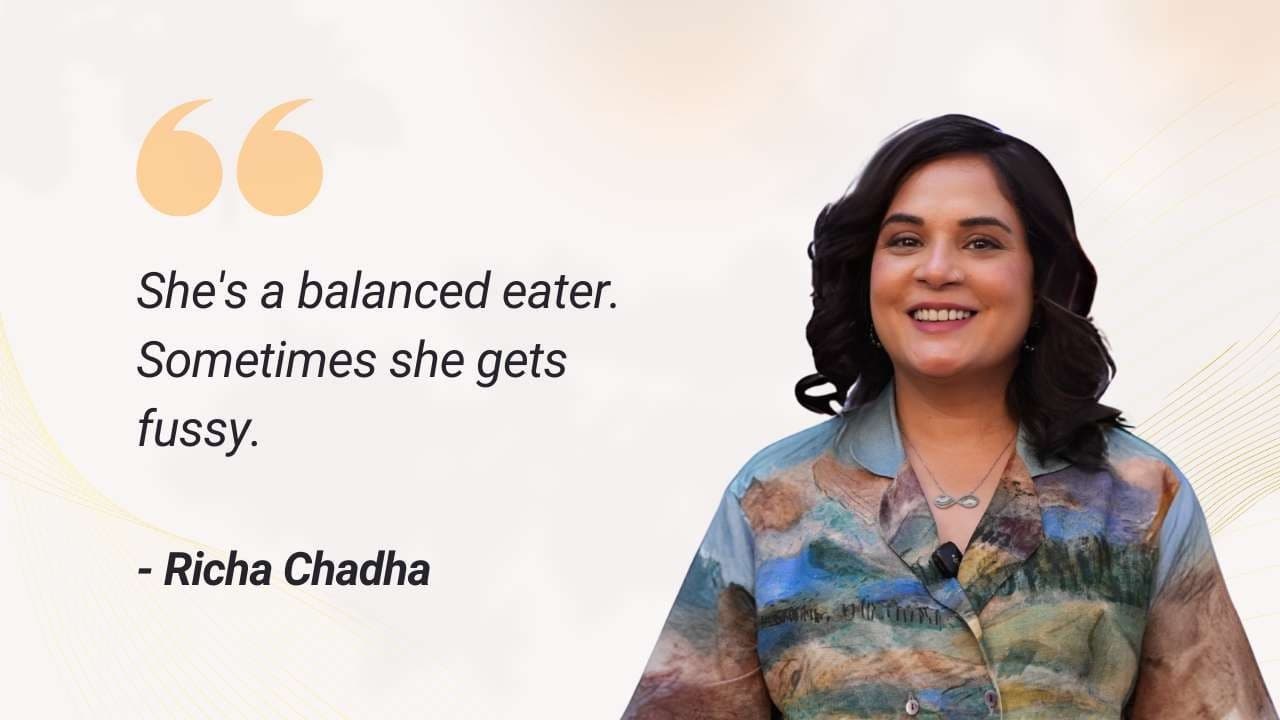
True to form, Richa Chadha and Ali Fazal approach parenthood with the same rigor they bring to their careers, methodically attuning to Zuneyra's needs while granting her the space to explore independently. Food offers a vivid illustration: Chadha champions balance amid the inevitable chaos of mealtimes, viewing spills as essential lessons in sensory development. "I try to keep a healthy mix of foods in Zuneyra's diet. First up, we've not given her sugar because Ali (Fazal) read some research that said if you don't give kids sugar in the first 4-5 years of their life, they don't develop insulin-resistance later. The only sugar she gets is through fruits, which she loves. We give her a healthy mix of protein and sometimes, even traditional things like a ragi gruel or jowar. We try to give her a variety of foods as much as possible and she loves staples like khichdi at night. We try to introduce variety through the same food as well, so if it's a boiled egg one day, it might be a fried egg another to help develop her taste. I've noticed that she's not very good with sour food though." "She's a balanced eater, overall," Chadha notes, "We let her make a mess because children need to feel textures in order to develop their pincer grip."
Education and the importance of empathy
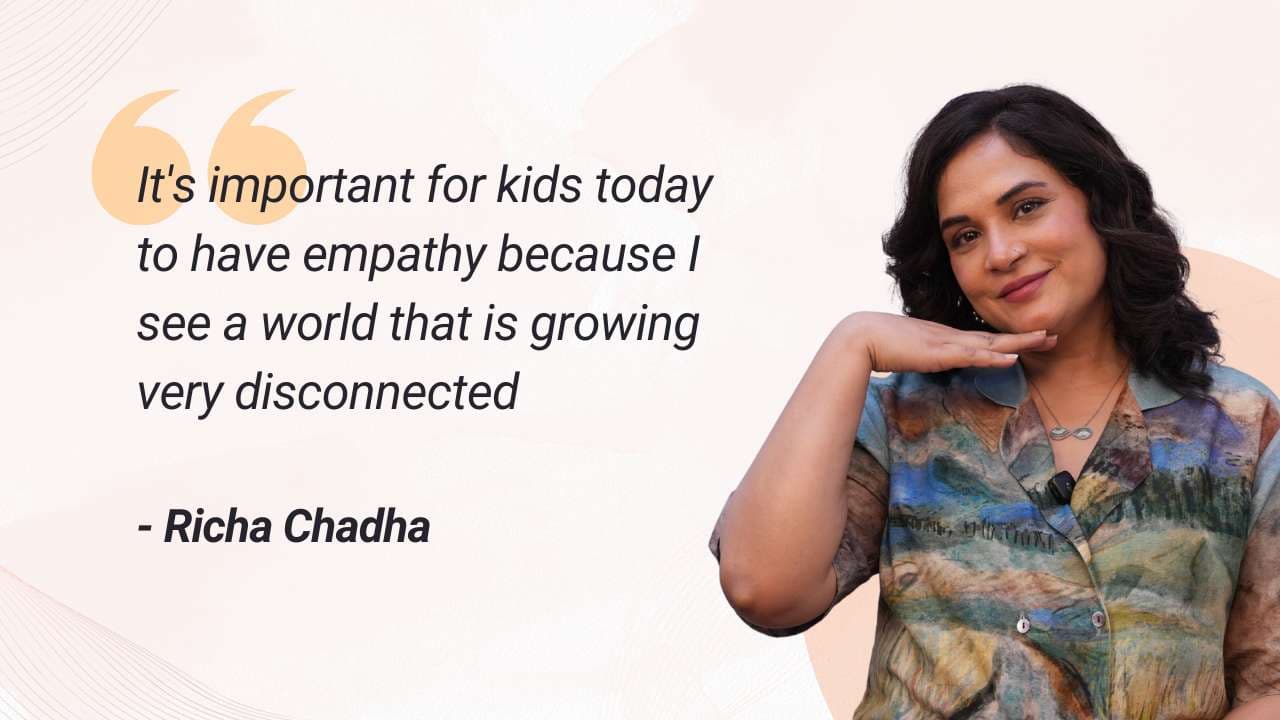
Having come from a school that leaned towards alternative learning, Chadha highlights how it helped her develop empathy at a young age, something she hopes to instill in her child. "I went to an alternative-learning school in Delhi called Saraswati Puri Nursery school (now known as Rajkumari Amrit Kaur Child Study Centre), which was in the Lady Irwin grounds and my mum used to teach there. There was a lot of influence from nature, we were allowed to play a lot. If there was a race in school, no one won, all the kids won for participation. I had kids with Down's syndrome in my class and that helped me develop a lot of empathy at a young age. I remember the school being inclusive and the teaching modalities were very different, which included colours and sandpits," she says, adding, "I think it is important to have empathy because it seems like we're growing in a world that has become very disconnected. Empathy is also important because it's like your protection in a social setting. In a situation where a person is drowning, empathy makes you the person trying to help, not the person recording a video on the sidelines. You can hope that someone else has raised a child with empathy who can step in and help when your child is in a tough situation. Empathy is something considered to be a weakness by some moronic billionaires but it's a great ability for the furtherance of species."
Setting boundaries while raising a child
Chadha's work boundaries closely mirror the ones she sets around her baby. While she strictly adheres to a 12-hour turnaround time at work, she also doesn't take unsolicited advice with regard to her child lightly. "You can expect mood changes and brain fog when you get back to your career right after delivery. It took me a good year and a half to find a rhythm. However, I've demanded a 12-hour work day which means if I've been on set till 9pm, I am not expected to return till 9am the next day. This gives me enough time to sleep and have some time to myself. So far, my personal life is organised in a way where either me and my parents or my husband or my nanny are with the baby at all times but when it comes to parenting tips, I don't want any gendered conversations around my child. If it happens (unsolicited advice), I ask them (the person giving the advice) to let it go or push back strongly if required. You have to negotiate each conversation with both your child and the people around them and that makes you acutely aware as a parent. I gauge all the advice with spontaneity and look closely at what my child needs" she says.
Workplaces need to be supportive
Chadha confesses that childcare is a privilege and she's cognisant of her own, she also admits it is something corporates and offices should provide for - the lack of which is a grievance many working mothers are talking about more openly. "For working moms, it's a luxury in this country to have childcare. But you do need support and I feel offices need to facilitate that. My production company has a majority of women and they're great at multitasking and efficiency and I see more patience and fewer ego battles. But if you want a team that's as efficient, you need to have facilities to support them when required," she says. With regard to her own working conditions, Chadha reflects back to a public comment she'd made about not feeling supported while getting back to work post pregnancy. "I didn't feel very supported when I got back to work by my previous manager. People are unwilling to understand what you're going through even though they've been through it themselves. Women need childcare and that's non-negotiable."
Mental stimulation for a child
Apart from taking time out of work for herself, Chadha also ensures she spends time with Zuneyra to help stimulate her mentally. For this, she uses a bunch of unique techniques, noting that it helps kids release the day's anxieties. "Since she (Zuneyra) was a six month old baby, I would make up nonsensical songs for her. It has become a way for her to reach out and feel included. At some point in the day, I make her dance to music that she likes. She could be diving into a pillow or jumping around, but she's finding her rhythm. Kids take on a lot of anxiety from people around them, they can sense it and this physical activity becomes a way of release," she says. Chadha also avoids screentime for her child. "Habits have changed and people are on their phones the entire time, even though we didn't grow up with devices. I don't want a zombie kid, so I don't give her screen time. She should know what she's eating and what she's experiencing. With the advent of AI, kids are going to have screens in their facem, even their glasses, so for as long as I can, I will try not to give her access to a screen. It is a hard habit to break.I understand it's a privilege, you could give a kid a screen to keep them busy while you go about your day but it is not good for the child," she stresses.
As our conversation with Richa Chadha draws to a close, she offers a parting reflection that cuts through the digital din. In an era dominated by AI and social media, where screen time feels inevitable and the urge to showcase a child online bows to social pressure, her advice is simple yet profound, "Give your child a book," she urges, "Because your child will grow up seeking that social validation otherwise." The words carry a poignant irony. Chadha, who has spent most of her career under the glare of public scrutiny, speaks with the clarity of someone who has witnessed the toll of constant visibility up close. Her introspection, a bulwark against the very world she navigates, underscores the thoughtful parenthood she and Ali Fazal are cultivating for Zuneyra.
Interview by: Namrata Nongpiur
Your All-In-One Baby Toolkit
Monitor milestones, growth, and discover unique baby names easily