pregnancy-by-week
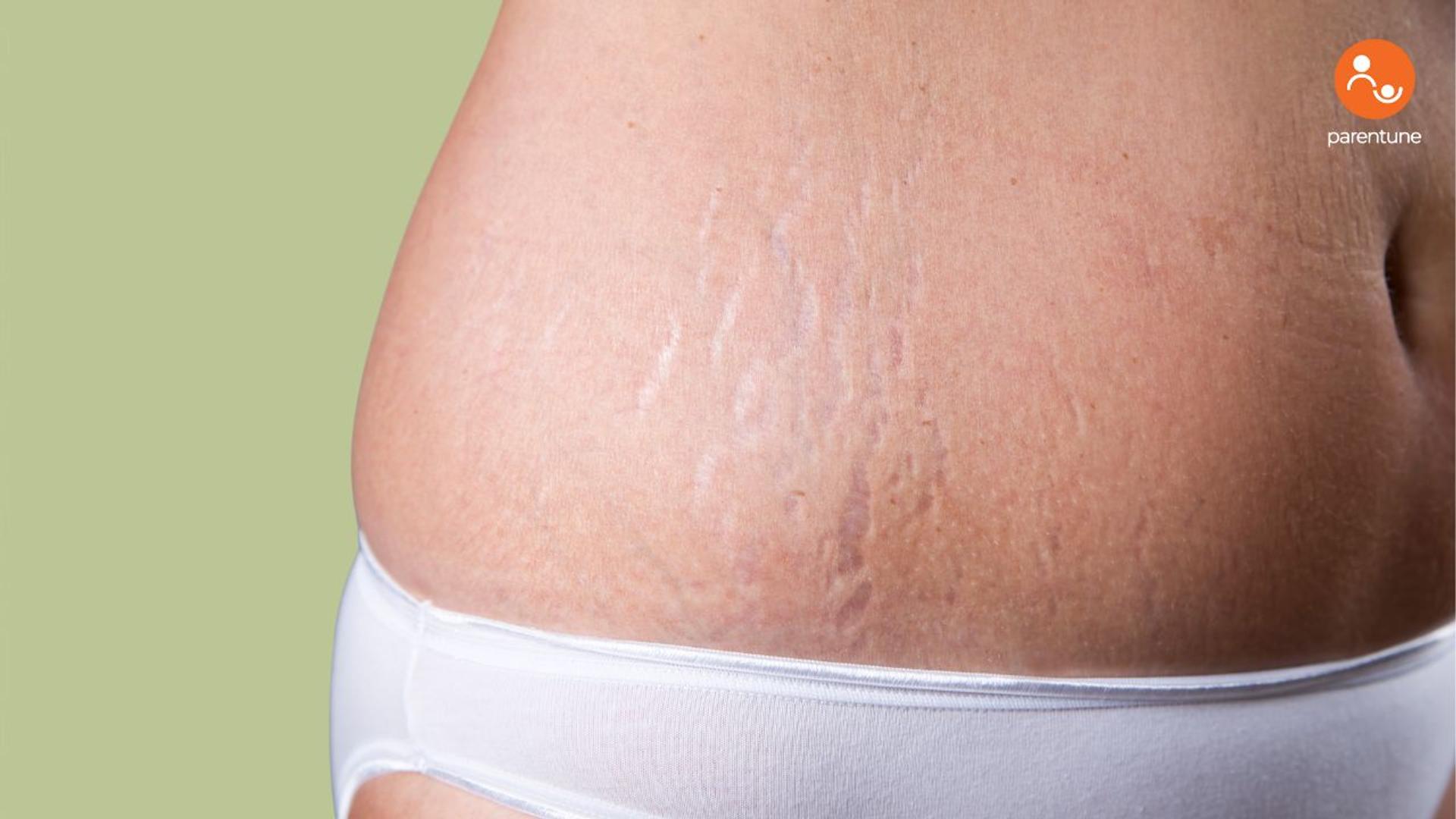
Stretch Marks In Pregnancy: Myths, Prevention, And Truths
pregnancy
1.2M views
14071720102156.png&w=64&q=75)

Published: 17 Jul 2025
A real talk on what causes them, what helps, and what doesn't.
Why do we care so much about stretch marks?
Because they show up uninvited.
You're growing a whole human—bone, brain, heartbeat—and yet it's the marks on your skin that feel personal. They whisper something we don't want to hear: You're changing.
And change, especially in your own body, isn’t just physical—it’s emotional, even existential.
So let’s peel back the layers. What’s real, what’s not, and what matters more than the marketing.
What causes stretch marks during pregnancy, really?
It’s not just about the skin stretching.
That’s the surface-level story.
The real trigger? Hormones.
Specifically, a spike in glucocorticoids—your body's stress-response hormones—that weakens collagen and elastin fibers under your skin. Which means less bounce, more breakage.
Add in rapid weight gain, genetics, and how hydrated or nourished your skin is—and now you’re watching those silvery or purple lines emerge on your belly, breasts, thighs, or hips.
This isn’t about being careless. It’s biology playing its cards.
You may also like:
Myth #1: Only women with dry skin get stretch marks
Nope.
Plenty of women with glowing, oily, deeply hydrated skin still get stretch marks.
Why?
Because this isn’t about moisturization alone. It’s about what’s happening beneath the surface. Deep dermal tears occur when the skin’s structural support system can't keep up with the body’s rapid expansion.
Hydration helps, but it’s not armor.
Myth #2: Expensive creams will save you
Marketing loves insecurity.
And in pregnancy, there’s a whole aisle of belly butters, stretch mark oils, and collagen creams making promises that sound like guarantees.
But here’s the truth:
No topical product can prevent stretch marks entirely.
What they can do is:
-
Improve skin elasticity modestly
-
Relieve itchiness from stretching skin
-
Support healing after the fact
But claiming prevention? That’s overreach dressed as hope.
Myth #3: If your mom didn’t get stretch marks, you won’t either
Genetics do play a role.
If your mother or sister got stretch marks during pregnancy, you’re more likely to as well. But “more likely” isn’t the same as certain.
Just like some people scar easily while others don’t, your skin’s response to stretching is part of your unique biology.
So yes, your genes matter. But so do:
-
How much weight you gain
-
How quickly it happens
-
Your hormone levels
-
Skin tone (darker skin tones are more likely to see pigmented marks)
There’s no single predictor. Just tendencies—and outliers.

Also worth reading:
Stretch marks aren’t flaws. They’re adaptations.
This matters.
Your skin is a living organ responding to an extraordinary demand: making space for a new life. It stretches because it has to.
The mistake isn’t in the stretch—it’s in the shame we attach to it.
At Parentune, we see moms sharing real stories about stretch marks—not as scars to hide, but as reminders of what they’ve created. That kind of solidarity? It’s powerful. Because when we stop hiding, we start healing.
What actually helps prevent or minimize stretch marks?
No magic bullet. But smart systems.
Let’s break it down.
1. Gradual, healthy weight gain
Stretch marks worsen with sudden weight spikes. Follow your doctor’s advice on healthy pregnancy weight gain—usually 11–16 kg depending on your BMI.
Steady gain = less dermal shock.
2. Daily moisturizing (but for function, not fantasy)
You’re not rubbing away stretch marks.
What you are doing is:
-
Improving skin hydration
-
Supporting elasticity
-
Reducing itching and micro-tears
Go for simple, high-fat options like:
-
Shea butter
-
Cocoa butter
-
Almond oil
-
Vitamin E oil
Massage gently. Think of it as nourishment, not prevention.
3. Staying hydrated from the inside
Drink water like it’s your job.
Hydrated skin is more elastic skin. This doesn’t mean you’ll avoid marks completely, but it does improve your skin’s resilience.
Pro tip: Add electrolyte-rich fluids—especially if you’re sweating a lot or nauseated. Think coconut water, lemon-salt water, etc.
4. Collagen-supporting foods
You can’t out-eat your genetics, but you can feed your skin.
Focus on:
-
Bone broth (rich in natural collagen)
-
Vitamin C (needed for collagen synthesis)
-
Zinc-rich foods (like seeds and lentils)
-
Protein (your skin’s building block)
Food isn’t a fix. But it’s part of the system.
What about after birth? Do stretch marks go away?
They don’t disappear. But they evolve.
In the first few months postpartum, stretch marks that once looked red or purple may fade to a silvery hue. They become softer, flatter, and less noticeable.
Treatments like laser therapy, microneedling, or retinoid creams can help—but only after delivery and with medical guidance.
If you choose to treat them, that’s valid.
If you choose to wear them as a badge, that’s powerful.
So what’s the takeaway?
Stretch marks aren’t proof of damage.
They’re proof of growth—sometimes literal, always metaphorical.
The pressure to prevent them isn’t coming from your biology. It’s coming from a culture obsessed with undoing the signs of motherhood instead of honoring them.
And at Parentune, we’re done pretending that perfection is the point.
Mothers here talk about real things: sore nipples, scary ultrasounds, silent fears, and stretch marks. Not as liabilities—but as stories etched into skin.
Final thought?
Don’t fight your body’s history.
Understand it. Support it. Honor what it’s made room for.
Stretch marks are not weakness. They’re stretch marks.
Let them mean what you decide they mean.
Liked this piece? Join the Parentune community where thousands of expectant moms and new parents swap real stories, expert-backed answers, and emotional truth-telling—without filters.
Because parenting isn’t a performance.
It’s a shared practice.
Your All-In-One Baby Toolkit
Monitor milestones, growth, and discover unique baby names easily




Be the first to support
Be the first to share