developmental-milestones ...
When Do Babies Recognize Their Name? A Science-Backed Timeline Every Parent Should Know
14071720102156.png&w=64&q=75)


Published: 05/08/25
Updated: 05/08/25
You're in the kitchen. Your baby’s in the bouncer. You call out their name. They pause. Look. Smile.
Is that recognition—or just coincidence?
It’s one of those quiet milestones that hits different. Unlike crawling or clapping, it’s subtle. But deeply emotional. Because the moment your baby responds to their name, it feels like the beginning of connection—their first “I know you know me” moment.
So when does that moment usually happen?
Let’s zoom in.
First, What Does “Name Recognition” Really Mean?
Doctor Q&As from Parents like you
It’s not just about turning their head.
True name recognition means your baby is starting to:
-
Associate a sound (their name) with their sense of self
-
Filter that sound out from background noise
-
Respond intentionally, not randomly
In other words, they’re not just reacting—they’re relating.
Also Read:
So When Does It Happen? Here’s What the Science Says
Between 4 to 6 months, the name begins to stick.
Studies using EEG and behavioral tracking show that most babies begin to:
-
Turn consistently toward their name by 5 months
-
Show signs of familiarity with the name’s sound by 4 months
-
Differentiate their name from other words by 6 months
But here’s the kicker—recognizing doesn’t always mean responding clearly. That might take longer. And that's okay.
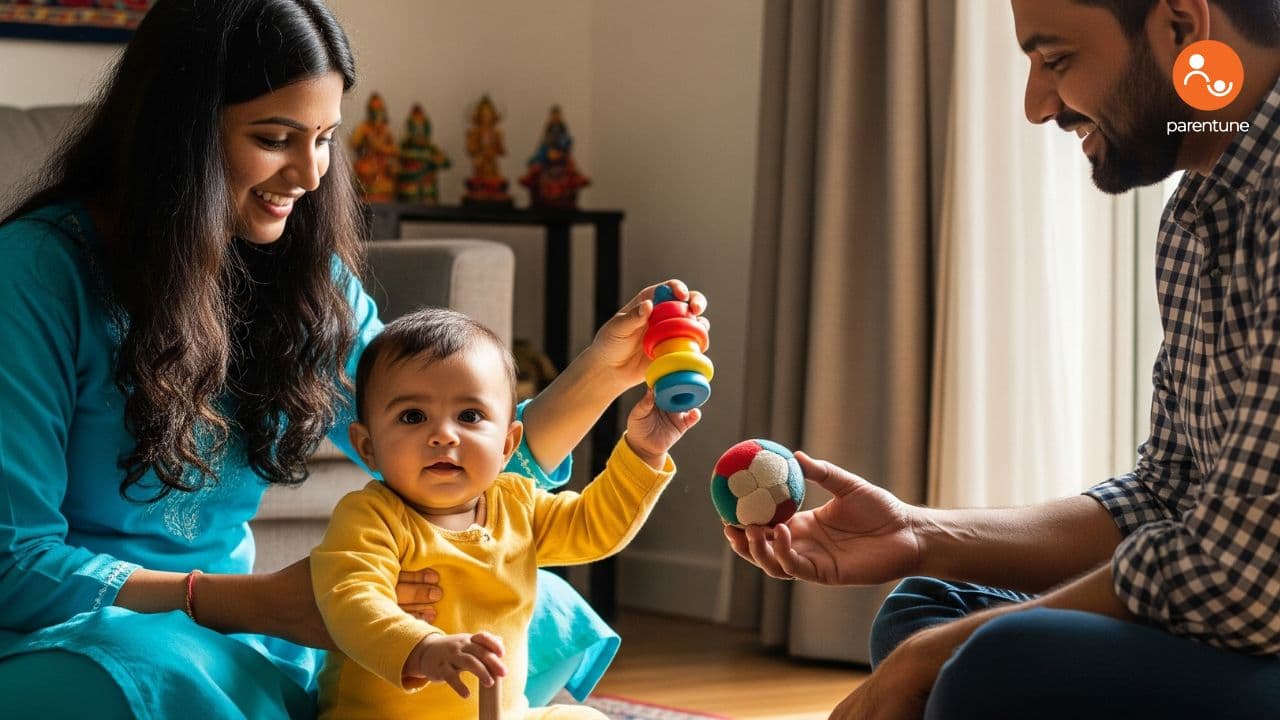
How Does Name Recognition Develop?
Step by step, and rooted in repetition.
Here’s a rough timeline you can hold loosely:
0–3 Months: Laying the Sound Foundation
-
Your baby starts picking up on tone and pitch
-
They prefer human voices—especially yours
-
Their brain’s beginning to organize sounds
4–6 Months: Recognition Kicks In
-
Repeated use of their name creates memory links
-
They start turning toward you when you say it
-
This is when true name recognition begins
7–9 Months: Consistency Improves
-
Responses become more reliable
-
They may smile, coo, or reach toward you
9–12 Months: Name Becomes Identity
-
They start associating “Me” with that sound
-
Their name becomes part of their developing self-concept
What Does “Normal” Look Like? (And What Doesn’t)
Every baby is on their own timeline.
But by 6 to 7 months, most babies:
-
Will turn when called from across the room
-
Respond differently to their name versus other names
-
Look for the person calling them
By 9 months, that reaction should feel more consistent.
If your baby doesn’t respond at all to their name by 12 months, it’s worth mentioning to your pediatrician. Not because it’s panic time—but because early detection opens doors.
What Can Delay Name Recognition?
Let’s talk real-life friction.
Several factors can influence this timeline:
-
Hearing issues – Mild hearing loss can go unnoticed but affect sound processing
-
Language exposure – If their name isn’t used often, association takes longer
-
Screen time and noise clutter – Makes it harder for babies to filter key sounds
-
Neurodivergence – In some children, especially those on the autism spectrum, name response may develop differently
The absence of response doesn’t equal the absence of connection—it may just mean we need to tune our expectations.
Simple Ways to Encourage Name Recognition (Without Overdoing It)
You don’t need a program. You just need intention.
Here are a few parent-tested ways to make their name feel like home:
-
Say their name before eye contact, not after. It teaches them to turn because of the name.
-
Keep background noise low when you're playing or feeding.
-
Sing their name in lullabies—babies love melody-driven patterns.
-
Use their name in warm, joyful moments, not just when correcting them.
-
Watch for subtle cues—like a pause in movement or eye flicker. That is recognition.
Recommended Reads:
What About Nicknames and Pet Names? Do They Confuse Babies?
Surprisingly—no, not if they’re used consistently.
Think of names like keywords in a search engine. If you're always calling your baby “Momo” instead of “Mohit,” then “Momo” becomes the mental tag.
Just don’t use too many interchangeable nicknames at once. One or two is fine. But too much variation = slower association.
What This Milestone Really Teaches Us
A name is more than a word. It’s a mirror.
When a baby starts responding to their name, they’re not just learning who they are. They’re learning who you are in relation to them.
It marks the shift from “I exist in the world” to “I exist with someone.”
That’s powerful.
What If You're Still Unsure About Your Baby’s Progress?
This is where platforms like Parentune shine.
Sometimes, parents just want to ask:
“Is this normal?”
“Am I overthinking it?”
“What did other parents experience at this stage?”
Parentune’s expert-verified insights and peer-shared stories help you feel less alone in the guessing game. Because when you're in the thick of parenting, community matters as much as accuracy.
Final Thought: Recognition Is Just the Beginning
Name recognition is your baby’s first social skill.
It’s the building block of language, bonding, and emotional connection.
So whether it happens at 5 months or 9 months—remember:
-
It’s not a race
-
It’s not a report card
-
It’s a relationship unfolding
And like all meaningful relationships, it grows with attention, not urgency.
Quotable Insight:
“Your baby recognizing their name isn’t proof of intelligence—it’s proof of intimacy.”
Be the first to support
Be the first to share