sleep-health
When To Stop Sleeping On Your Back During Pregnancy
14071720102156.png&w=64&q=75)


Published: 14 Jul 2025
Your body sends quiet signals. Pregnancy teaches you to listen louder.
Is Back Sleeping During Pregnancy Really A Problem?
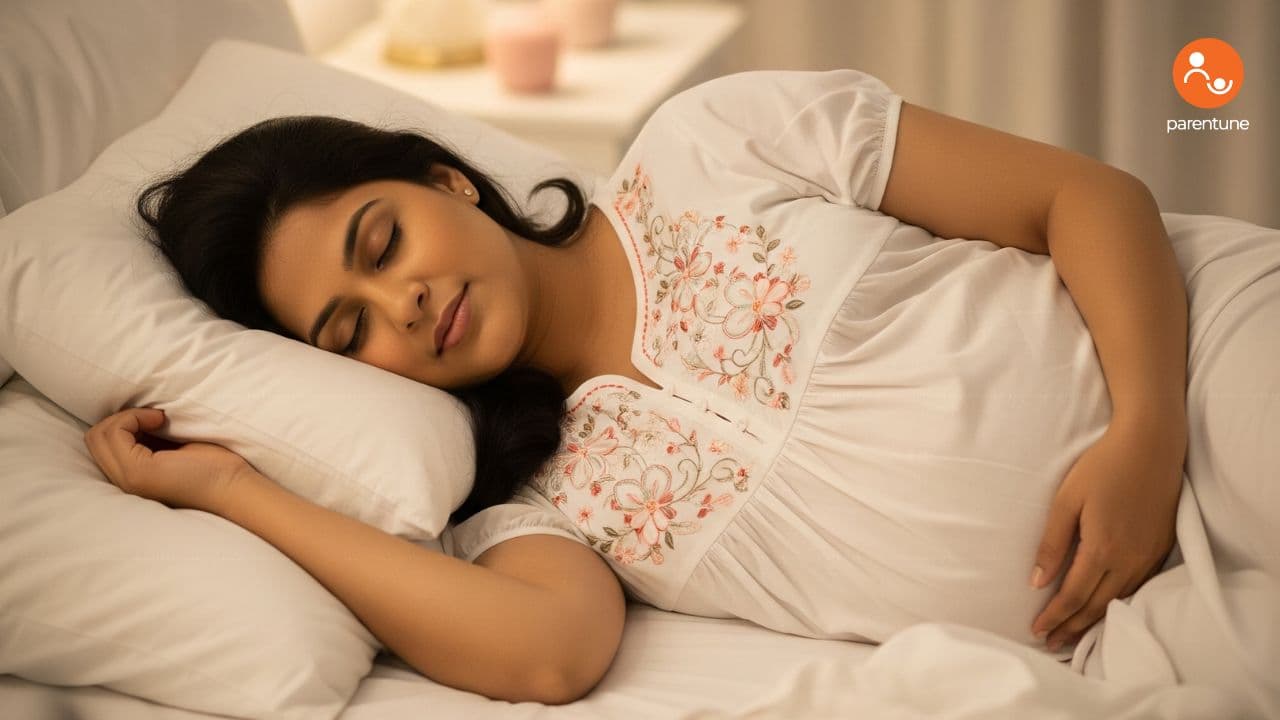
Let’s start where most of us do—flat on our backs, propped on a pillow, phone in hand, halfway through a reel.
It feels harmless. Comfortable, even.
But somewhere around the second trimester, something changes. What used to feel restful now feels... off.
Because your body isn't just yours anymore. There’s weight. Pressure. Circulation demands. And sleeping flat on your back starts working against all of that.
Why Back Sleeping Becomes Risky After 20 Weeks
It’s not about superstition. It’s about blood flow.
Around the 20-week mark, your growing uterus can compress the inferior vena cava—a major vein that carries blood from the lower body back to your heart.
That compression can:
-
Reduce blood flow to the placenta
-
Lower your blood pressure
-
Cause dizziness, shortness of breath, and even fainting
-
Impact oxygen supply to your baby
It’s not always noticeable. But that’s the point. The risk is silent. And sleep, ironically, is when you’re least aware of your body’s red flags.
Check these out too
So When Should You Actually Stop?
Around the beginning of your second trimester—week 20—is when most experts say: shift.
But like most things in pregnancy, there’s nuance.
-
Occasionally waking up on your back? Not an emergency. Just roll back to your side.
-
Still back sleeping every night for the past 28 weeks? That’s where the data starts to show increased risk.
This isn’t fear-based advice. It’s probability-based care.
Why Side Sleeping—Especially The Left Side—Is Ideal
It’s not just about avoiding the back. It’s about optimizing blood flow.
Left side sleeping:
-
Maximizes blood flow to your heart
-
Improves kidney function (which can reduce swelling)
-
Helps your baby get more oxygen and nutrients
Right side is okay too. The key principle? Side is safe. Back is risky. Stomach is, by now, impossible.
But What If I Can’t Control How I Sleep?
Here’s the truth no one tells you: you can’t. Not fully.
Sleep is subconscious. What matters is what you intentionally do when you go to bed.
Try this:
-
Start on your side, not your back
-
Place a pillow behind your back to stop you from rolling
-
Use a pillow between your knees for spine and hip support
-
Wedge a small pillow under your belly as it grows heavier
Your body will follow the cues you set.
What If I Accidentally Wake Up On My Back?
Don’t panic.
One study in the British Journal of Obstetrics and Gynaecology found that conscious sleep position mattered more than brief, unconscious changes.
If you wake up on your back, simply roll back to your side. It’s the habitual position that counts—not the midnight shuffle.
Real Talk: Sleep During Pregnancy Is Hard Enough
You’re adjusting to:
Recommended readings
Now add a sleep restriction? Of course it's frustrating.
But shifting to your side is one of those rare pregnancy choices that requires almost no cost and gives a real payoff.
And like much of pregnancy, it’s less about perfection and more about intention.
What Does Science Say About Sleep Position And Stillbirth Risk?
A study from New Zealand found that women who went to sleep on their backs after 28 weeks had double the risk of stillbirth compared to those who slept on their sides.
Let that land.
This isn’t a scare tactic. It’s evidence-based guidance. And while stillbirth is still statistically rare, why increase the risk if it’s within your control?
What About Naps On The Couch Or In A Recliner?
Good question.
Recliners are a grey zone. If you’re not fully flat—and your upper body is elevated at an angle—it’s generally okay.
But if you feel lightheaded, short of breath, or your heart races while lying back, that’s a sign: your body doesn’t like that position. Listen.
What Parents On Parentune Are Saying
In the Parentune community, this question pops up often. And the consensus is beautifully simple:
"I thought it would be hard to change my sleeping style. But once I placed that body pillow along my side, my sleep got deeper. And I stopped worrying."
Shared wisdom makes transitions easier.
And that’s what Parentune is built for—real stories from real parents navigating the same maze. Back sleeping included.
3 smart strategies to train your sleep position
Let’s make it actionable.
1. Body pillow trick
A C-shaped or U-shaped maternity pillow trains your body to stay in a side curl. Bonus: It eases hip and lower back pressure.
2. Tennis ball method
Sew a tennis ball into the back of your sleep shirt. Sounds silly? Maybe. Works? Yes. It makes rolling onto your back uncomfortable, so you stay put.
3. Bed wedge
Place a firm wedge under your right side to create a gentle tilt. Even slight elevation can take pressure off the vena cava.
What If I Have Pregnancy Complications?
If you’ve been diagnosed with:
-
Placenta previa
-
Gestational hypertension
-
Preeclampsia
-
IUGR (Intrauterine growth restriction)
Then side sleeping—especially on the left—isn’t just recommended. It’s essential.
Because in these cases, blood flow isn’t just a comfort issue. It’s a life support system.
The Deeper Insight: Pregnancy Is Full Of Silent Trade-Offs
You give up sushi. Skip wine. Endure swollen feet and unsolicited belly touches.
Shifting sleep position might feel small—but it's one of the few changes that directly improves your baby’s well-being overnight.
And here’s the kicker:
You don’t need to do it perfectly. You just need to do it more often than not.
That’s true of parenting, too.
Final Takeaway: Sleep Like It Matters—Because It Does
Pregnancy sleep isn’t about luxury. It’s about protection.
Start sleeping on your side by week 20. Make it your default. Reinforce it with support. Don’t stress if you slip—just reset.
And when in doubt? Ask. Share. Listen.
That’s what Parentune is for—a place where parents make sense of the silent stuff together.
Because small shifts in sleep… can shape big outcomes for tomorrow.
Your All-In-One Baby Toolkit
Monitor milestones, growth, and discover unique baby names easily


Be the first to support
Be the first to share