By the 19th week pf pregnancy, your baby’s sensory development has developed like anything! His or her brain has been designated special areas for hearing, vision, smell, touch and taste. Your baby’s brain develops millions of motor neurons by this stage. These neurons help the brain muscles to communicate, further translating into baby using involuntary and purposeful movements. By now, your little tot can move the head, suck thumb and other moves, which you might start to feel. By now your baby is about 8.5 ounces big, measuring to about 6 inches, from head to rump. This would be about the size of pomegranate. As far as his or her arms and legs are concerned, they are in direct proportion with each other and even with the rest of the body by now. Your baby’s kidneys continue to develop and he or she is now able to make urine. The baby’s scalp hair is also now gradually sprouting. Although the scalp hair is going to be white in colour and practically pigment-free as the colour of the hair is still yet to be determined. The most peculiar thing about this stage is that your baby has a protective coating all around, which is called as vernix caseosa. This layer is developing on his or her skin in order to prevent the amniotic fluid from pickling. This cheesy, varnish coating is a protective substance that now covers your fetus’ skin. If visually seen, it appears white, greasy and is made up of lanugo (that downy hair), dead skin cells and oil from your baby’s glands. Even though this waxy substance might appear too appealing, but it is an important aspect to protect your baby’s sensitive skin from the surrounding amniotic fluid. It is without this fluid that your baby would appear to be wrinkly at birth – imagine your baby being soaked in a bath for nine months and hence this substance is important your baby’s skin protection. This vernix is going to shed as soon as your delivery approaches. But having said that, please note that some babies might still be covered in the vernix, so you might get to look at your baby’s first anti-wrinkle cream. Another major development taking place by the 19th week of pregnancy is that your baby’s brain develops at a rapid rate, while all other systems continue to grow. And the developments just don’t stop here. This is because your baby is going to weigh way more than your placenta, but that doesn’t translate into much more body fat on your baby’s body. Although your baby is still small, your baby might have a kick of a few small movements. Your baby’s skin is now losing its translucent look and is soon developing the pigment, which will determine its skin tone. Your tiny bundle of joys’ heart is developing at a phenomenal rate, which can be heard when your gynaecologist uses ultrasound to check for it.
 Content verified by Dr. Shubhi Gupta
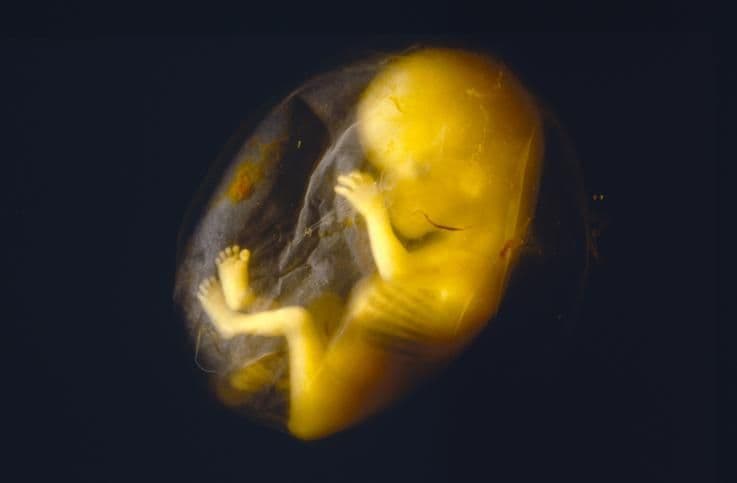

Week 19
Weeks to go!
Your baby is about the size of a pomegranate. Areas of the brain responsible for smell, taste, hearing, vision, and touch are developing, and you may notice more regular fluttering movements.
Weight
200g
Length
11.6 cm
Days Left
147
Expert Advice
Reviewed by: Natural remedies like ginger and peppermint may help you feel better. Eating smaller but more frequent meals may help ease those feelings of nausea as well. It is also important to stay hydrated now and throughout your pregnancy.” Dr.Birbala Rai, M.B.B.S., M.S. in Obstetrics & gynaecology, Senior Consultant at PSRI Hospital, New Delhi
“During your 19th week of pregnancy and the weeks surrounding this time, your body continues to change and adapt to accommodate your baby’s current growth and future needs. Your body makes more blood. Your circulatory system expands and keeps blood pressure lower than normal. As a result, you might get dizzy, lightheaded, nauseated, or faint if you stand or rise too quickly. Around your 19th week of pregnancy, you might experience nasal congestion, nosebleeds, and headaches due to increased blood flow. You also might encounter tender or bleeding. At 19 weeks pregnant, your lung capacity continues to increase. You might breathe faster or experience shortness of breath.
Have a pregnancy concern?
Get expert medical advice from the comfort of your home
Related Blogs


Ask Doctor
Can pregnant moms take the pertussis vaccine to protect their baby?

Dr. Nida Asif
Pediatrician
The pertussis vaccine is commonly recommended during pregnancy, but yo...read more
Can pregnant moms take the pertussis vaccine to protect their baby?

Dr. Nida Asif
Pediatrician
Mild discharge can be common in pregnancy. If it has a strong smell, i...read more