It is after the amalgamation of your egg and your partner’s sperm that you have been able to from a cluster of cells inside your body, which will soon result into a real live baby in your arms. Best feeling in world, right? Right before being a foetus and embryo, at this stage your baby is a blastocyst (a blastula or cluster of cells in which some differentiation of cells has occurred), which is growing multiplying and rapidly at this very point. A part of blastocyst will soon become placenta, an organ detected by pregnancy tests. Now, the amniotic fluids will collect around the cells and will protect and cushion your baby all around the pregnancy term.Placenta is producing the pregnancy hormone, called hCG (human chorionic gonadotropin), which dictates your ovaries to not release any more eggs while triggering a spike in the production of estrogen and progesterone. It is this hormone that lets your uterus to not shed its lining – and its tiny passenger – while increasing the growth of the placenta. It is during this time your little baby is going to witness significant foetal development, such as development of heart, spinal cord, brain and gastrointestinal tract. At this stage, the sex of your baby has already been defined, which you might not know until birth. The fertilised egg contains a total of 46 chromosomes, out of which 23 are from the mother and 23 are from your father. While the mommy’s chromosomes are called X, the dad’s chromosomes can be X or Y chromosomes. Right now, the size of your baby cannot be properly determined, because as of now it is just a group of cells and not exactly a baby. It is in actuality the size of the head of a normal sewing pin and is around .048 mm or around .0019 inches long.
 Content verified by Dr. Shubhi Gupta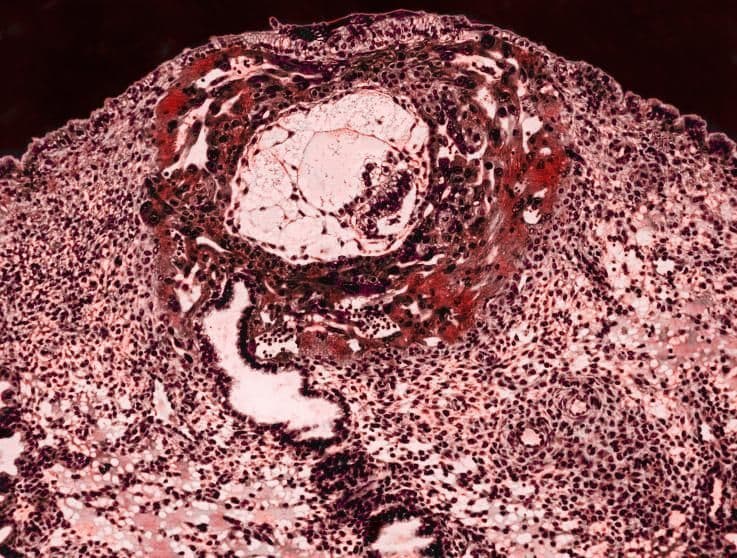

Week 3
Weeks to go!
This week, fertilisation may happen if the egg and sperm meet. The fertilised egg (zygote) will soon implant into the uterine lining. Foundational layers that will become your baby's organs are forming.
Weight
< 1g
Length
0.3 cm
Days Left
259
Expert Advice
Reviewed by: Dr.Mangala Ramachandra, Consultant Obstetrics & Gynaecologist Fortis Hospital, Bannerghatta Road, Bangalore
“Due to hormonal changes, women at this stage witness morning sickness and to avoid this they should eat in small quantities frequently. At the same time should avoid greasy, fried and spicy food that takes longer to digest and causes acidity. Exercise is restricted at this stage until the Anomaly scan. An anomaly scan is a detailed ultrasound scan that rules out all major abnormalities in the various organs of the body like brain, heart, kidneys etc. It is usually done at 18-20 weeks of gestation. Before starting exercises, placenta localisation has to be done to check the location of placenta. If the placenta is low-lying then the exercises has to be changed accordingly as any wrong exercise could lead to bleeding.”
Have a pregnancy concern?
Get expert medical advice from the comfort of your home
Related Blogs


Ask Doctor
Can pregnant moms take the pertussis vaccine to protect their baby?

Dr. Nida Asif
Pediatrician
The pertussis vaccine is commonly recommended during pregnancy, but yo...read more
Can pregnant moms take the pertussis vaccine to protect their baby?

Dr. Nida Asif
Pediatrician
Mild discharge can be common in pregnancy. If it has a strong smell, i...read more