daily-tips
How To Safely Introduce Solids At 7 Months: A Parent's Guide To Timing, Textures & Trust
14071720102156.png&w=64&q=75)


Published: 16/07/25
Updated: 16/07/25
It starts with a spoon. But it’s never just about the food.
So the real question isn’t what to feed—it’s how to shape a lifelong relationship with food.
Let’s break it down. Not with generic tips, but with a practical framework rooted in real parenthood, doctor-backed milestones, and the quiet wisdom of moms who’ve been there.
Why 7 Months Is A Sweet Spot For Starting Solids
Your baby’s body is finally ready. So is their curiosity.
Doctor Q&As from Parents like you
By 7 months, most babies have:
-
Good neck control
-
Can sit with minimal support
-
Lost the tongue-thrust reflex (so they won’t automatically spit everything out)
-
Shown interest in what’s on your plate
This is nature’s way of saying: "Let’s begin experimenting."
Not to replace milk—but to complement it.
Breastmilk or formula still remains the primary nutrition until 12 months. Solids at this stage are not about filling the tummy—they’re about building familiarity, coordination, and joy around food.
Start With A System, Not A Panic
Don’t treat food like a checklist. Treat it like an invitation.
The goal isn’t to get them to eat a bowlful.
The goal is exposure—letting your baby explore food with their eyes, hands, mouth, and even a bit of mess.
Here’s a simple system:
-
One new food every 2–3 days
Gives you time to notice any allergies or intolerances. -
Start mid-morning
Avoid first thing in the morning or late at night—makes it easier to watch for reactions. -
Small portions, soft textures
A teaspoon to start. Think of it as a tiny taste test, not a meal. -
Repeat foods multiple times
Babies often need 8–10 exposures to accept a new flavor. Rejection is part of the process.
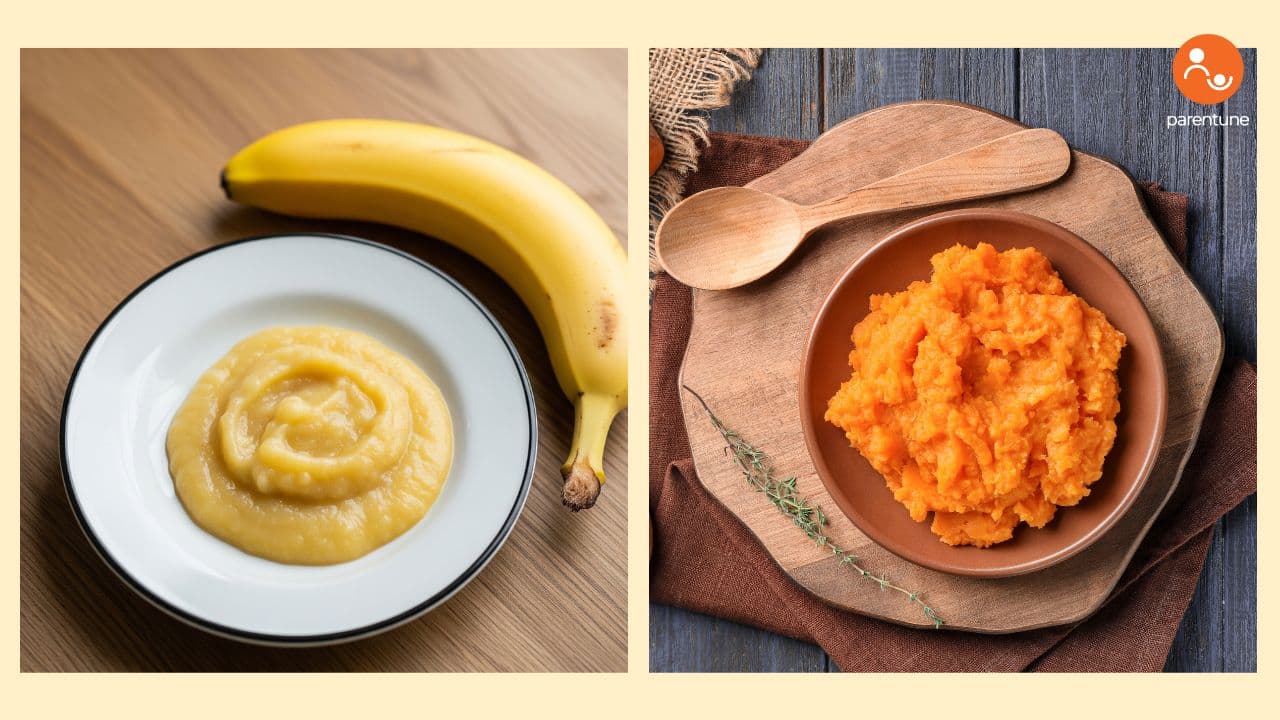
What Solids To Introduce At 7 Months: Real Examples
Skip the fancy superfoods. Start with what’s local, seasonal, and easy to digest.
Here’s a short list that works beautifully for Indian households:
-
Mashed banana
Easy, sweet, full of potassium -
Boiled and mashed carrots or sweet potato
Naturally soft, mildly sweet -
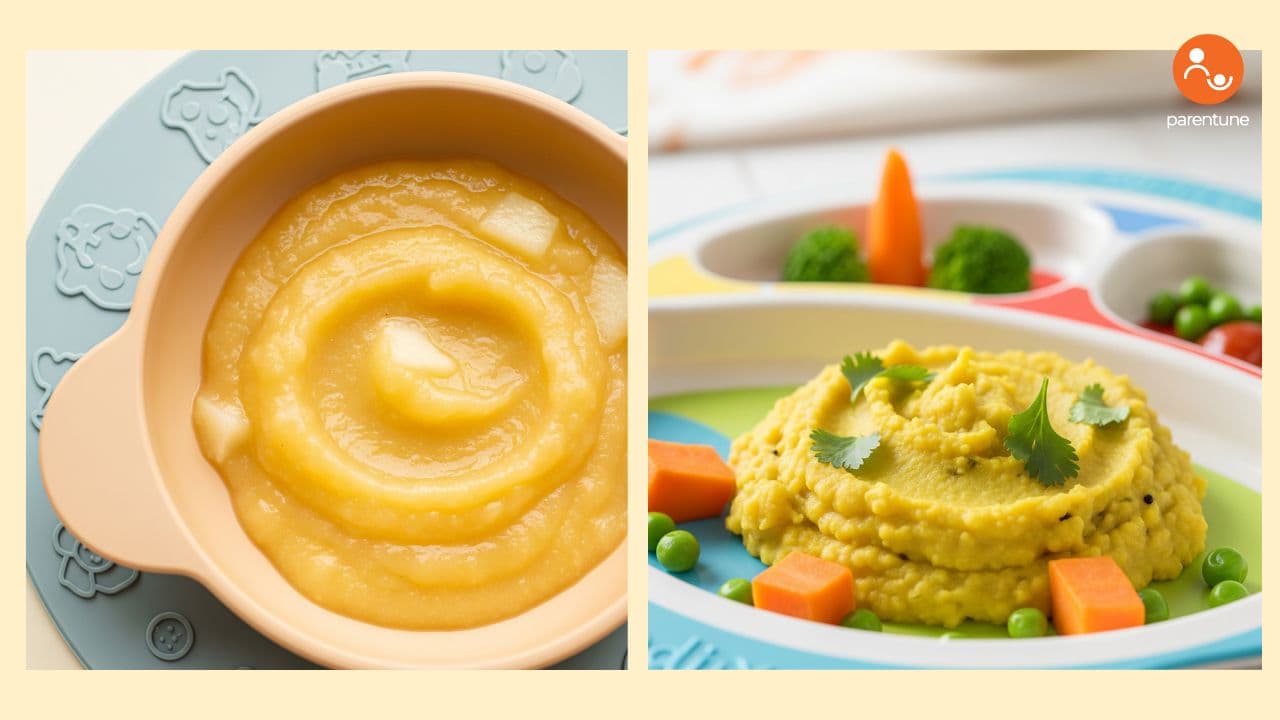
Moong dal khichdi
Protein-rich, easily digestible -
Rice cereal or homemade suji kheer
A smooth, comforting first grain -
Apple or pear purée
Cooked and mashed to avoid raw fruit sensitivities
Tip: Avoid honey, cow’s milk, and whole nuts at this stage. They're either unsafe or too hard to digest.
Feeding Tools: What To Use (And What To Ditch)
A soft-tipped spoon. A steady hand. And zero pressure.
Let the baby lead when it comes to pace and interest.
Skip:
-
Forcing bites
-
Playing videos during feeding
-
Using feeders with mesh nets (they can delay sensory exploration)
Instead, go old school:
-
Use a katori and spoon
-
Sit your baby upright in a high chair or your lap
-
Watch their cues—leaning in, turning head away, spitting out
Remember: Feeding is a conversation, not a command.
How To Know If Your Baby Is Actually Ready?
Every baby has their own rhythm. Read the signals, not the calendar.
Here are green flags to look for:
-
Baby can sit up without slumping over
-
Shows interest in your food (reaching, staring, smacking lips)
-
Opens mouth when food approaches
-
Can move food to the back of the mouth and swallow without choking
And red flags to pause or slow down:
-
Gagging often (occasional gagging is normal; choking is not)
-
Pushing food out with tongue constantly
-
Refusing solids entirely after multiple tries
Don’t panic. Wait a week. Try again.
Also worth reading:
Allergy Awareness: What To Watch Out For
The body speaks. You just have to listen closely.
Introducing one new food at a time helps identify potential allergies.
Here are common signs of food allergy in infants:
-
Rashes or hives
-
Swelling of lips or face
-
Vomiting or diarrhea
-
Persistent fussiness after feeding
Call your pediatrician if you spot any of these. For known allergens like eggs or peanuts, consult your doctor before introducing them.
At Parentune, many moms share how they built an allergy log during this phase—just a small notebook to track food and reactions. It's simple, but it brings clarity.
Recommended readings:
What If Your Baby Refuses Solids?
Food refusal at 7 months is not a verdict. It’s a phase.
Many babies:
-
Teethe during this time
-
Feel off during weather changes
-
Prefer milk for comfort
The trick isn’t to push harder. It’s to wait, watch, and reintroduce. This isn’t about force-feeding—it’s about creating trust.
You’re not just feeding a baby.
You’re nurturing a future eater.
How To Balance Solids And Milk Feeds
Think of solids as the side dish, not the main course.
Here’s a rough rhythm that works:
-
Milk feed on waking
-
Solids mid-morning
-
Milk feed before nap
-
Solids in early evening (optional)
-
Milk before bed
That’s it.
No need to obsess over quantity. Focus on quality of exposure and ease of digestion.
What Role Does the Parent Play in All This?
You are the environment.
Your calm = their curiosity
Your consistency = their confidence
Don’t worry about spoons-per-minute. Focus on the ritual of mealtime:
-
Sit with them
-
Talk about the food
-
Let them touch and explore
-
Eat something alongside
Feeding is not a transaction. It’s a mirror of your relationship with food.
What Parentune Moms Say About Starting Solids
This isn’t just expert advice. It’s community wisdom in action.
At Parentune, thousands of Indian moms share their honest stories:
-
What worked for them
-
What didn't
-
How they managed travel, festivals, or sickness during this phase
One mom said, “My daughter hated dal but loved curd. I thought something was wrong. Turns out, she just had her own preferences.”
Another added, “When I stopped rushing, she started reaching out for the spoon herself.”
Sometimes the best expert is another parent who’s one step ahead of you.
Final Thought: You’re Not Late. You’re Right On Time.
Milestones are not stopwatches. They’re signposts.
Your 7-month-old doesn’t need to be eating three meals a day by next week.
They just need a safe, sensory-rich space to explore.
A space where food is joy, not anxiety.
And you—yes, you—are already doing it right by showing up, staying curious, and seeking trustworthy guidance.
That’s what Parentune is here for.
To stand with you, not above you.
To be the community that helps parenting feel a little less alone.
Because no one raises a child in isolation.
And no spoonful is ever just a spoonful.
Be the first to support
Be the first to share