daily-tips
How To Tell If Your Newborn Is Too Hot Or Too Cold At Night
14071720102156.png&w=64&q=75)


Published: 06 Aug 2025
The hidden system behind baby comfort—and why getting it wrong disrupts more than just sleep
The night doesn’t start when the lights go out. It starts with a question:
Is my baby warm enough? Or too warm?
Every new parent knows this dance.
You touch their chest. You check the back of the neck. You wonder if the fan is too high, if the AC is too low, if that swaddle is too thick for July.
Because babies don’t come with thermostats. But they do come with signals.
And learning to read those signals isn’t just about comfort—it’s about safety, sleep, and sanity.
Why Newborns Struggle To Regulate Body Temperature
Newborns aren’t miniature adults. They’re heat-sensitive machines in the making.
Their thermoregulatory system—the body’s ability to maintain a stable core temperature—is immature at birth. That means:
-
They lose heat faster than older kids or adults
-
They generate less body heat through movement or fat stores
-
They don’t sweat or shiver efficiently yet
Which makes them highly vulnerable to both overheating and getting chilled.
Especially at night, when you're asleep too.
What Does 'Too Hot' Actually Look Like?
The signs are subtle—until they’re not.
Here’s how to tell if your newborn is overheating:
-
Warm chest, back, or neck (use your palm, not fingers)
-
Sweating, especially on the head
-
Red or flushed skin
-
Rapid breathing
-
Irritability or restlessness
But the scariest sign?
A baby who’s too quiet.
Overheating is a known risk factor for Sudden Infant Death Syndrome (SIDS). Unlike cold discomfort, which tends to wake babies, heat can lull them into deep, unresponsive sleep.
That’s why feeling hot but sleepy isn’t always a good thing.
What About Being Too Cold?
Cold discomfort is easier to spot—and louder.
When babies are too cold, they usually let you know:
-
Cold chest or back (not just hands or feet—those are always cooler)
-
Shivering (rare in very young newborns but possible in older infants)
-
Sneezing or hiccups after diaper changes or night feeds
-
Fussing or crying when laid down without enough layers
Here's the paradox:
Cold babies cry. Hot babies don’t.
Which means you're more likely to notice underheating—but more at risk when you miss overheating.
Recommended Reads:
What’s The Ideal Room Temperature For Newborn Sleep?
Here’s the goldilocks zone:
68°F to 72°F (20°C to 22°C) is the sweet spot.
Warm enough to prevent cold stress. Cool enough to reduce SIDS risk.
But the number on the thermostat doesn’t tell the full story.
Humidity, clothing, airflow, and bedding all interact with that temperature.
Which leads us to the next question...
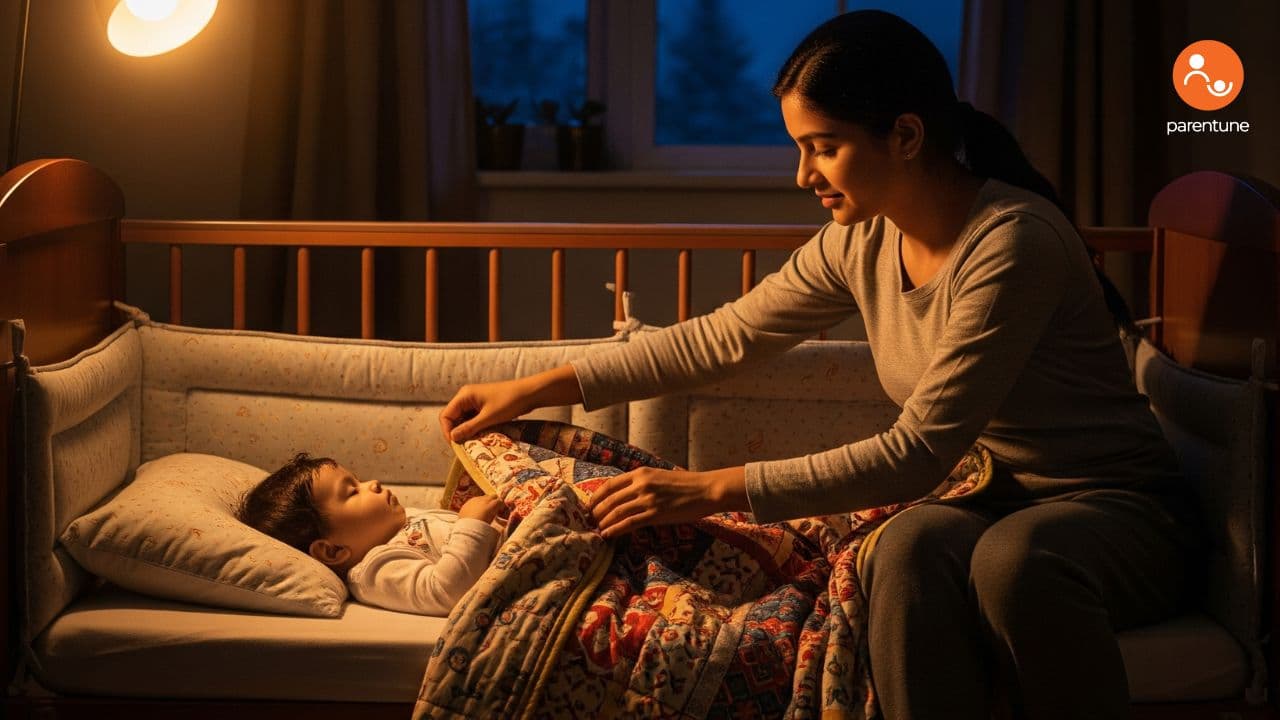
How Many Layers Should Your Newborn Wear At Night?
There’s a simple rule most pediatricians and veteran moms agree on:
One more layer than you’re wearing comfortably.
If you're sleeping in a T-shirt and sheet, your baby might need:
-
A cotton onesie
-
A light sleeper or sleep sack
Avoid hats indoors at night—babies release heat through their heads.
And never use loose blankets in the crib. Use fitted sleep sacks or wearable blankets instead.
Still Unsure? Use The Chest Test
Forget their hands. They’re always cold.
To check if your baby’s just right:
-
Slide your palm inside the onesie, onto the chest or back.
-
The skin should feel warm, not hot. Comfortably neutral is your goal.
-
If the skin feels clammy or sweaty, remove a layer.
-
If it’s cool to the touch, add a light one.
This tactile method works better than any gadget.
The Hidden Cost Of Temperature Discomfort
It's not just about sleep. It’s about trust.
When babies feel safe and physically comfortable, they rest better. That rest powers their growth, immunity, and brain development.
But the parent-baby bond suffers when comfort is off.
Fussy nights make you second-guess everything—from your swaddle choice to your ability to parent.
That’s where peer wisdom and real-time support help.
Communities like Parentune exist for this very reason.
Because sometimes what you need isn’t a new thermometer—it’s a new perspective.
What If Your Baby Still Seems Unsettled At Night?
Temperature might be part of the picture—but not the whole canvas.
Other culprits:
-
Hunger spurts
-
Gas or colic
-
Developmental changes (like sleep regressions)
-
Overstimulation before bedtime
Here’s a useful lens:
Check the body, then the belly, then the brain.
-
Body: Are they too hot or cold?
-
Belly: Are they full but not overfed?
-
Brain: Are they overstimulated or undertired?
Comfort starts from the outside in.
Quick Checklist: How To Prep Your Baby’s Sleep Space
1. Keep the crib bare.
No pillows, bumpers, or loose blankets.
2. Dress smartly.
Layers over bulk. Sleep sack over swaddle after 8 weeks.
3. Feel the chest, not the hands.
Your most reliable sensor is your own hand.
4. Maintain room temperature between 20–22°C.
Use a thermometer in the room, not just the AC setting.
5. Avoid overheating.
A slightly cool baby will cry. An overheated baby might not.
What This Teaches Us About Parenting Systems
Temperature isn’t just a physical metric.
It’s a proxy for attention. For attunement. For the invisible labor of caring.
Getting it “just right” is less about tools and more about tuning in.
Which is why Parentune parents often say the same thing:
"I didn’t need more advice. I needed reassurance."
This journey isn't about knowing everything—it’s about noticing.
And naming.
And asking the right questions at the right time.
Final Takeaway?
Your baby doesn’t need perfect conditions. They need responsive ones.
Warmth isn’t in the blanket.
It’s in the hands that check.
And check again.
Your All-In-One Baby Toolkit
Monitor milestones, growth, and discover unique baby names easily

Be the first to support
Be the first to share