medical
Postpartum Hair Loss: Why It Happens And How To Reduce It Naturally
14071720102156.png&w=64&q=75)


Published: 24 Jul 2025
What every new parent deserves to know—but no one talks about enough
Your hair isn’t falling out. It’s catching up.
That’s the paradox of postpartum hair loss.
During pregnancy, many moms experience thicker, shinier hair—what some jokingly call the “prenatal glow.” Then comes month three or four after childbirth. Suddenly, there’s hair in the shower drain, on the pillow, tangled in the baby’s tiny fingers.
It feels alarming. But it’s also completely normal.
Let’s unpack what’s really going on—and how to respond in ways that are smart, gentle, and rooted in what your body actually needs.
What Causes Postpartum Hair Loss?
Blame it on the hormones—but not in the way you think.
During pregnancy, estrogen levels rise dramatically. One surprising side effect? Your hair stays in its growth phase longer. That means fewer strands fall out daily.
But after birth, estrogen levels drop. And all that delayed shedding? It happens all at once.
This is called telogen effluvium, a fancy term for temporary hair shedding after a major body event—like childbirth, surgery, or extreme stress.
Here’s how the timeline usually looks:
-
Weeks 1–8: Little change. Hair still feels full.
-
Month 3–4: Noticeable shedding begins.
-
By Month 6–9: Shedding typically slows down.
-
By Month 12: Most hair regrowth is underway.
The key word here? Temporary.
You may also like:
How Much Hair Loss Is “Normal” After Delivery?
Think of it like this:
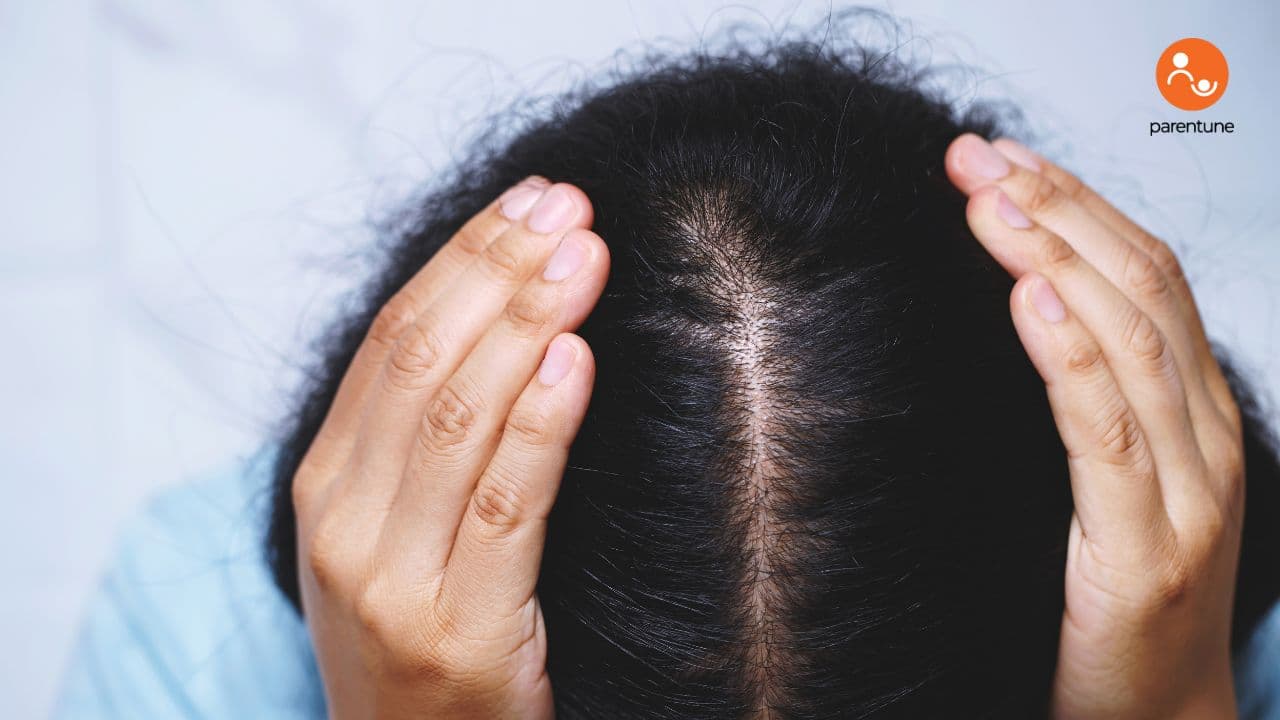
The average person loses about 50–100 strands a day. A new mom? Easily 300–400 strands daily during peak shedding.
It’s not fun. But it’s not permanent.
If you’re seeing:
-
Clumps in the shower
-
A widening part
-
More hair on your brush or pillow
You’re likely right on schedule. But if shedding is severe or continues past a year, it’s worth checking in with your doctor to rule out thyroid changes or iron deficiency—both common postpartum culprits.
Is There A Way To Prevent It?
No. But there are smarter ways to manage it.
Trying to stop postpartum hair loss is like trying to stop autumn leaves from falling. It’s a natural process.
But you can minimize the stress on your scalp and nourish regrowth.
So What Can Help? Natural Strategies That Work
Let’s break it down into manageable actions—small shifts, big results.
1. Be kind to your scalp
This is where regrowth begins. Avoid:
-
Tight hairstyles like ponytails or buns
-
Harsh brushing or teasing
-
Heat styling tools
Instead, opt for:
-
Wide-toothed combs
-
Air drying
-
Loose hairstyles that don’t tug
Think of your scalp like a garden. If you till it too aggressively, nothing grows.
2. Rebuild from the inside out
Your body’s still healing. Hair is a non-essential system, so it’s often last in line for nutrients. Support it by focusing on:
-
Protein-rich foods – eggs, lentils, paneer
-
Omega-3 fatty acids – walnuts, flaxseeds
-
Biotin and zinc – found in nuts, seeds, and whole grains
-
Iron-rich foods – spinach, beetroot, dates
And yes, continue your prenatal vitamins, especially if breastfeeding. They’re not just for baby—they’re for you too.
3. Try scalp massage with natural oils
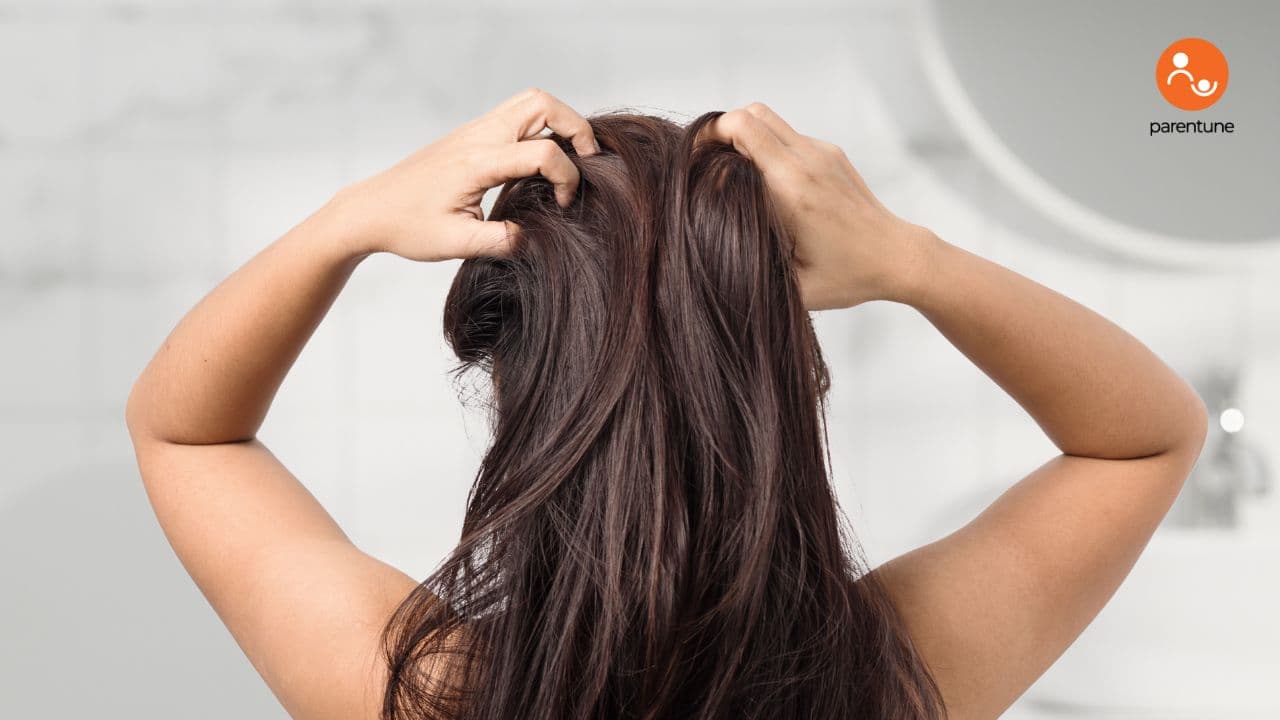
Just five minutes a day can boost blood circulation and create a better environment for regrowth.
Use:
-
Coconut oil – anti-inflammatory and hydrating
-
Castor oil – known for promoting thicker hair
-
Rosemary oil – shown to stimulate hair follicles (diluted with a carrier oil)
Consistency matters more than quantity. Set a weekly ritual—massage while your baby naps. Or better yet, ask your partner to help. (Yes, really.)
4. Manage stress like it matters—because it does
Cortisol, your stress hormone, directly affects hair growth. And let’s be real: parenting is stressful.
But small habits can shift the balance.
-
Go for walks with your baby (sunlight + movement = win-win)
-
Practice 10 minutes of deep breathing or guided meditation
-
Join a supportive parenting group like Parentune, where real moms share real stories—and what worked for them
Community isn’t a luxury. It’s a lifeline.
Also Read:
When To See A Doctor
If your hair loss:
-
Lasts beyond 12 months
-
Comes with fatigue, mood swings, or weight changes
-
Leaves bald spots or visible scalp patches
…it’s time to speak with a dermatologist or your gynecologist. You could be dealing with postpartum thyroiditis or other nutrient deficiencies that need expert support.
Don’t wait it out alone.
What About Postpartum Hair Regrowth?
Good news: it does grow back.
You may notice short, wispy strands near your temples or hairline—that’s your regrowth army in action.
Be patient. The full cycle takes time. But your body is working behind the scenes, even when you can’t see it yet.
Hair Loss Is Physical. But The Impact? Deeply Emotional.
You’re not just watching strands fall. You’re watching pieces of your identity shift.
The woman in the mirror may not look like the person you remember. But she’s not gone—she’s evolving.
Parentune’s community often shares how something as simple as hair loss can trigger complex emotions. Self-doubt. Loss of control. Even grief.
Which is why talking about it matters.
You’re not alone. And you’re not failing.
Final Thought: This Too Shall Pass—But With Support, It Feels Lighter
Here’s what’s true:
-
Hair sheds.
-
You heal.
-
Identity reshapes itself, strand by strand.
And in the meantime, you get to choose how to meet this moment—with gentleness, information, and community.
At Parentune, that’s what we’re here for. Real talk. Real experts. Real solidarity.
Because parenting isn’t just about raising a child. It’s about re-meeting yourself—sometimes with a new hair part and a whole lot more strength.
Your All-In-One Baby Toolkit
Monitor milestones, growth, and discover unique baby names easily


Be the first to support
Be the first to share