developmental-milestones ...
Should You Get A Walker For Your Baby?
infant
1.0M views


Published: 25 Aug 2025
Walking is one of the major milestones every parent eagerly awaits. Once parents see the signs, the first thing that comes to their mind is the walker. Once baby starts showing walking signs, out them in the walker. That’s a perfect solution, isn’t it?
Baby walkers are one of the most debated baby products. Paediatricians strongly deny the use of walkers. And we have parents who can’t survive without it. So, who is right here?
What Is A Baby Walker?
A baby walker is a device with a seat and wheels that allows babies to move around using their feet.
For parents, it is the easiest solution. Handling a mobile-ready baby really gets tiring for moms and dads. Walkers keep babies entertained giving the parents a short break. But sometimes, this convenience comes with serious implications.
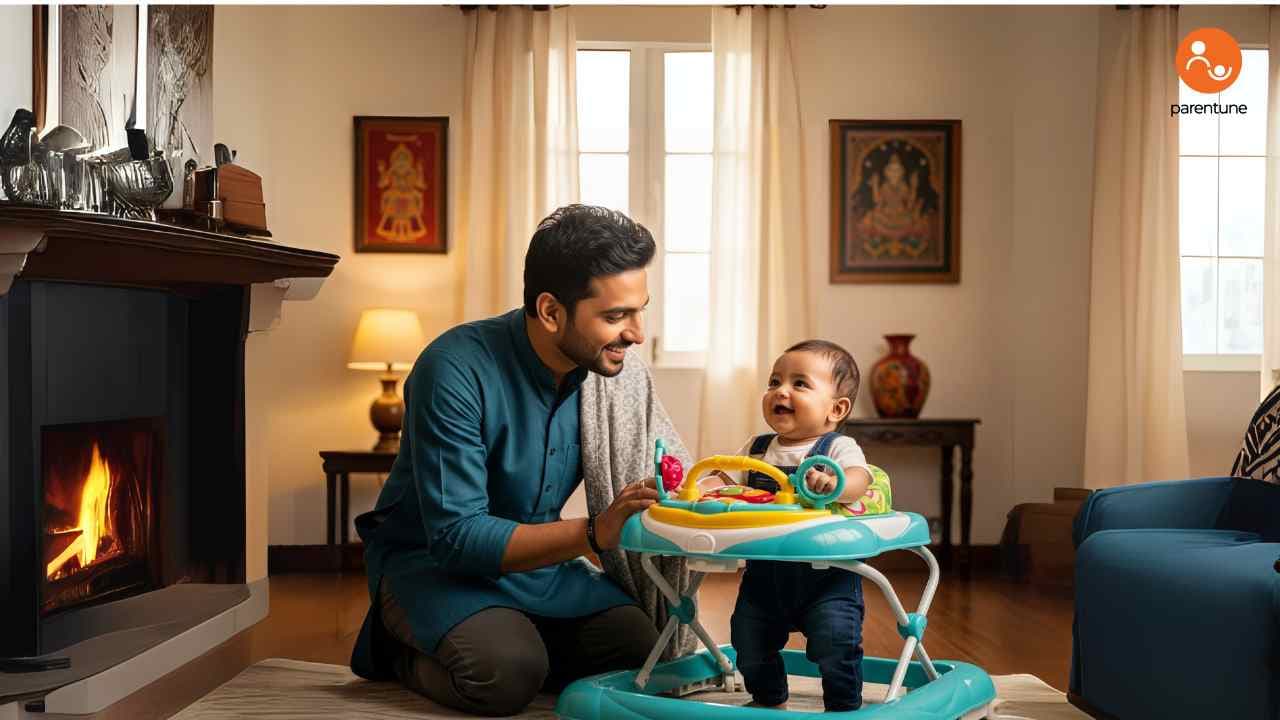
Why Parents Think Walkers Are Helpful
It Keeps the Baby Busy
Many caregivers use walkers to keep their little one busy while they can finish their house chores.
Encourages Walking
Walkers give the illusion that babies are practicing walking.
Entertaining for the Baby
With freedom to move, babies often enjoy being in walkers.
Recommended reads:
The Risks of Baby Walkers
1. Safety Hazards
Babies tend to move faster in walkers. They can reach dangerous spots like hot stoves or sharp objects.
2. Delayed Motor Development
Walkers do not help babies learn to walk. In fact, studies show they may actually delay walking. Walkers put babies in a position that doesn’t match their natural muscle development. Babies learn to walk by crawling and pulling up. With walkers, babies tend to skip those stages.
3. Poor Posture and Muscle Use
In walker, babies push with their toes. The ideal waking should be done with the flat part of their feet. This can affect how they develop strength in their legs and hips.
What Experts Say About Walkers
Child health organizations recommend avoiding baby walkers. In fact, Canada banned the sale of baby walkers in 2004. The American Academy of Pediatrics (AAP) has also called for a ban in the U.S.
What Are The Alternatives To Baby Walkers
1. Stationary Activity Centers
These look similar to walkers but don’t have wheels. Babies can bounce and play safely in it.
2. Push Toys
Push walkers like sturdy toy carts support natural walking since they don't maintain speed while walking
3. Floor Play
The simplest and most effective way is tummy time. Let them explore safely on the floor.
4. Parent-Supported Walking
Hold your baby’s hand and let them take those tiny steps with you. It is the safest way to practice walking.
Precautions If You Still Choose to Use a Walker…
- Let your little one use the walker for just 15 - 20 minutes a day.
- Always keep an eye on your baby while they’re in it.
- Use walkers only on flat surfaces.
- Choose walkers with wheel locks.
- remove sharp corners and block stairways.
Why Babies Don’t Need Walkers
Babies will walk when they are ready. No product can speed up the natural process of development.
Every baby has their own timeline. Some start walking at 9 months and some at 15 months. Both are normal.
Your baby doesn’t need a walker to walk. They just need your support and your cheering at every wobbly step.
Your All-In-One Baby Toolkit
Monitor milestones, growth, and discover unique baby names easily



Be the first to support
Be the first to share