nutritious-foods
When To Start Eating Dates In Pregnancy—And Why It Matters
14071720102156.png&w=64&q=75)


Published: 15 Jul 2025
(For every expectant mom who's ever wondered: “Is now the right time?”)
What If Something As Simple As A Date Fruit Could Help Your Labor Go Smoother?
Not the dinner-and-a-movie kind. The brown, wrinkly, surprisingly powerful fruit that’s been growing in desert oases and grandma’s kitchens for centuries.
You’ve probably heard whispers—on WhatsApp groups, from your prenatal yoga class, or even your mom’s neighbor’s cousin—about dates helping with labor. But when should you start eating them? And more importantly, why does it even matter?
Let’s break it down.
First, What Are Dates Doing In A Pregnancy Article Anyway?
Because they’re nature’s labor prep team.
Dates are high in natural sugars, but that’s just the surface. They contain:
-
Potassium (helps with muscle contractions)
-
Magnesium (supports fetal growth)
-
Fiber (reduces constipation—yes, that annoying pregnancy symptom)
-
Tannins (believed to help with uterine tone)
-
Natural prostaglandins (compounds that play a role in cervical ripening)
They aren’t magic. But they are remarkably useful.
What Does Science Say About Dates And Labor?
A lot, surprisingly.
Multiple small studies (particularly one published in the Journal of Obstetrics and Gynaecology) found that women who consumed dates daily in the final weeks of pregnancy:
-
Had a shorter first stage of labor
-
Were more likely to go into labor naturally
-
Had less need for induction drugs like Pitocin
And here’s the kicker: these benefits came from simply eating 6 dates a day from 36 weeks onward.
Yes. That’s it. No supplements. No rituals. Just 6 dates.
You might find these interesting
So, When Exactly Should You Start Eating Dates In Pregnancy?
Let’s map it by trimester:
First Trimester (Weeks 1–12):
Hold off.
This is the delicate beginning, and while dates are generally safe in moderation, their high sugar content and mild laxative effect could worsen early pregnancy nausea or digestion issues.
Second Trimester (Weeks 13–28):
Still optional.
Dates offer energy, but they don’t directly impact labor prep at this stage. If you’re constipated or need a natural sweet snack, go ahead—just don’t treat them as a miracle yet.
Third Trimester (Weeks 29–40):
This is where the date magic begins.
Start eating 4–6 dates daily from week 34 or 36 onwards, depending on what your doctor recommends. The key idea? Give your body enough time to absorb and benefit from their labor-supportive properties.
But Aren't 6 Dates A Lot Of Sugar?
Yes and no.
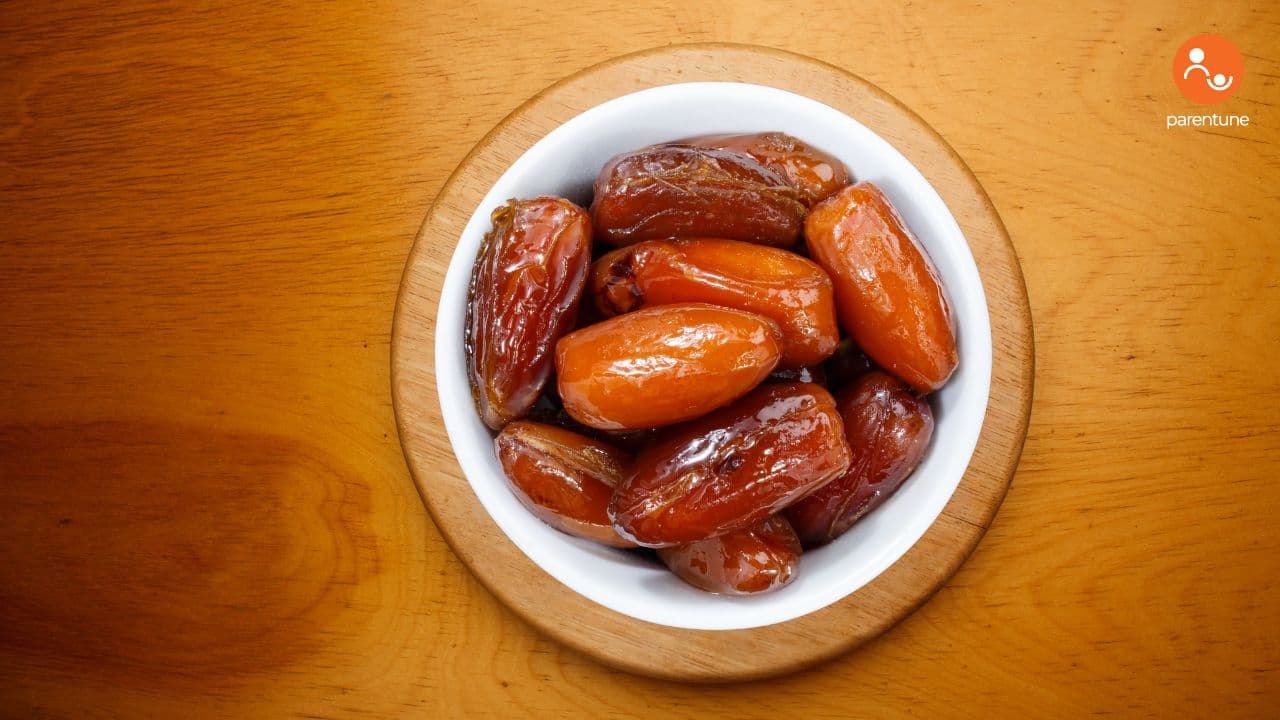
Six Medjool dates clock in at about 350–400 calories and nearly 100 grams of natural sugar. That’s a lot if you’re also snacking on mangoes, milkshakes, or laddoos.
But here’s how to think about it:
-
Replace, don’t add. Use dates to replace less nutritious sweets or refined snacks.
-
Pair with nuts. Dates + almonds = a blood-sugar-friendly, fiber-rich combo.
-
Go whole. Date syrup or paste won’t offer the same fiber benefit as the fruit itself.
What Happens If You Start Late—Or Not At All?
Nothing bad, necessarily.
Not eating dates won’t harm your baby. But skipping them might mean missing out on an easier labor experience.
This is one of those rare, low-risk options where the potential upside is big, and the downside is minimal—unless you’re diabetic or on a strict low-sugar diet. (Always check with your OB.)
3 Smart Ways To Add Dates To Your Third-Trimester Routine
-
Morning kickstarter: Blend them into a smoothie with milk, banana, and oats.
-
Afternoon snack: Stuff dates with peanut butter or almonds.
-
Sweet swap: Use chopped dates in place of sugar in desserts like kheer or halwa.
So Why Does The Timing Of Dates Matter So Much?
Because pregnancy isn’t a constant state—it’s a journey of physiological shifts.
Your uterus changes. Your cervix softens. Your hormone levels rise and recalibrate.
Starting dates too early is like revving an engine before the track is ready.
Starting too late may not give your body enough time to benefit.
Like most things in pregnancy—iron supplements, folic acid, pelvic floor exercises—timing isn’t just helpful. It’s strategic.
Also worth reading:
What Does This Teach Us About Pregnancy Nutrition As A Whole?
That there are no shortcuts—just better systems.
And that small, consistent acts (like eating 6 dates a day) often shape the bigger outcomes (like a smoother labor).
This is the kind of insight more moms deserve access to.
It’s also exactly why platforms like Parentune exist—because the real challenges of pregnancy aren’t solved by Google searches or viral Reels. They’re eased by community, credibility, and continuity.
Parentune isn’t just a blog. It’s where questions turn into clarity—with expert advice, peer experiences, and zero judgment.
Final Thought: Not All Labor Prep Happens In A Delivery Room
Some of it happens quietly.
In the kitchen. In the snacks you choose. In the decision to nourish your body one bite at a time.
So if you're in week 36?
Bring on the dates.
Because sometimes, the fruit you eat now can shape the birth story you tell later.
Your All-In-One Baby Toolkit
Monitor milestones, growth, and discover unique baby names easily




Be the first to support
Be the first to share