sleep-health
Do Babies Dream? What Science Says About Infant Sleep
14071720102156.png&w=64&q=75)


Published: 04/08/25
Updated: 04/08/25
Spoiler: It’s not just nap time. It’s brain-building in action.
The quiet mystery of a sleeping baby
A newborn lies still, eyelids flickering, breath uneven. You watch them sleep and wonder—what’s happening in that tiny head? Are they dreaming? Are they seeing images? Are they reliving the day’s feeds and faces?
The answer? Not exactly. But not quite no, either.
Let’s dive into the science, the speculation, and what it all means for your baby’s growing brain.
Do Babies Actually Dream?
Doctor Q&As from Parents like you
Dreaming requires a story—and babies are still learning the alphabet
Adults dream in narratives. There's a plot, characters, tension, resolution. Even toddlers, once they start stringing ideas into cause and effect, can likely experience something resembling this.
But newborns?
They don’t have the building blocks yet—no memory bank, no language, no inner monologue. So while they might experience internal stimuli, it’s unlikely they dream the way we do.
Instead of “dreams,” think of it as sensory rehearsal.
What Happens In A Baby’s Brain During Sleep?
REM sleep isn’t just for dreaming—it’s for development
Newborns spend up to 50% of their sleep in REM (Rapid Eye Movement) sleep. That’s a lot compared to the 20–25% seen in adults.
Why so much REM?
Because this phase is when the brain goes into overdrive—processing, organizing, wiring itself together. Even without stories or images, REM sleep helps babies:
-
Form early neural pathways
-
Build visual and auditory circuits
-
Practice muscle coordination (cue those adorable twitches)
In other words, REM is a rehearsal. Not for dreams—but for life.
Recommended Reads:
If Not Dreams, What Are Babies Experiencing During Sleep?
Think less storybook, more startup
A baby’s sleep is like a startup laying infrastructure—servers spinning, connections testing, systems syncing. It’s not flashy, but it’s critical.
What they might experience:
-
Flashes of light or color
-
Internal sensations (like hunger or touch)
-
Echoes of familiar voices
But there’s no evidence they “see” faces or dream about that toy giraffe. That comes later, as cognition and language take shape.
When Do Babies Start Dreaming?
The age of imagination begins when memory kicks in
Experts believe meaningful dreams may begin around 2 to 3 years old, when children start forming long-term memories and can verbalize them.
Before that? It’s mostly brain boot-up.
This means toddlers who wake crying from “bad dreams” around age 2 aren’t faking it—they’re finally capable of processing the world while asleep, and sometimes, it’s confusing or scary.
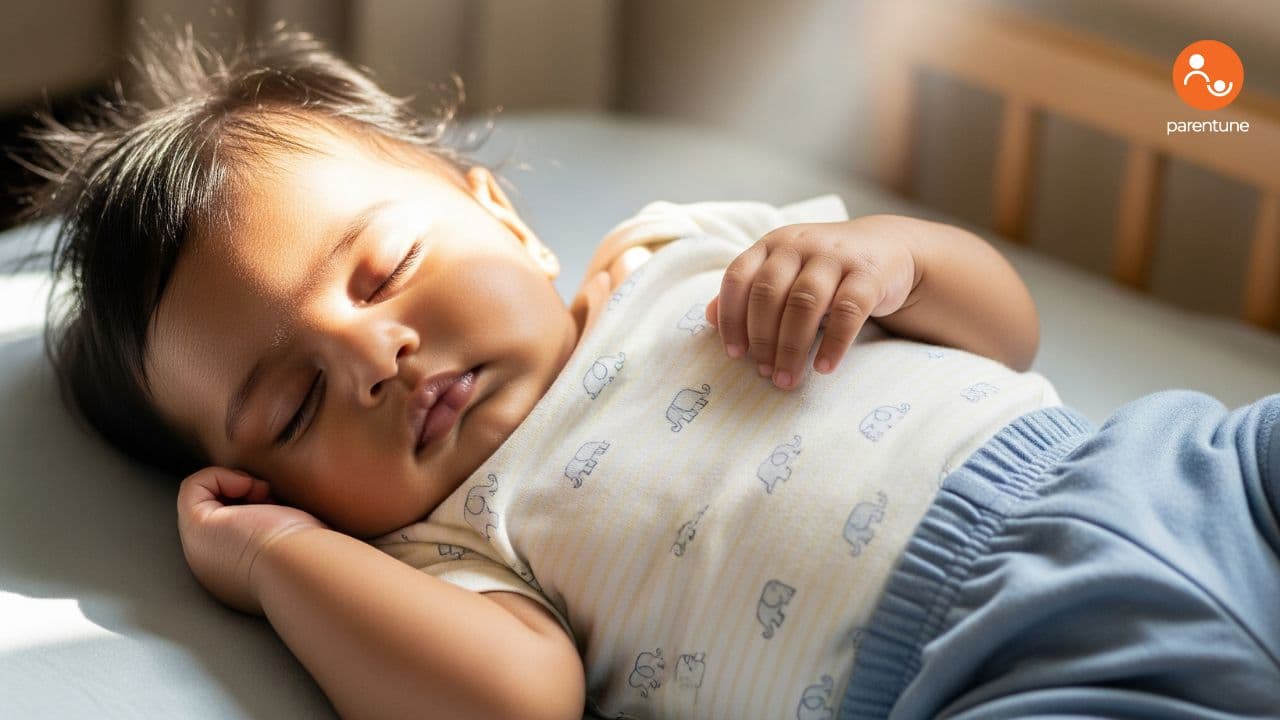
Why Do Babies Make Facial Expressions While Sleeping?
Smiles, frowns, grimaces—are these signs of dreams?
Short answer: not really.
These expressions are often reflexive—muscle twitches triggered during REM. It’s the nervous system wiring itself, not the baby reliving a memory.
Those sleep smiles? As magical as they look, they’re more physiology than emotion. But they do signal that your baby’s brain is firing and growing just as it should.
What Can Parents Take Away From This?
Sleep isn’t downtime—it’s development time
It’s easy to think of sleep as the break between milestones. But it’s the opposite. Sleep is the milestone.
-
It supports memory formation—even in newborns
-
It strengthens emotional regulation
-
It primes the brain for learning, connection, and eventually… dreaming
When your baby sleeps, they’re not switching off. They’re switching on—just behind the curtain.
So What Does This Mean For Your Parenting Journey?
It reframes the value of rest—for them, and for you
Understanding what’s really happening during baby sleep helps us:
-
Let go of guilt around “wasted” sleepy days
-
Prioritize nap routines as essential, not optional
-
Offer sensory-rich awake time to feed what sleep consolidates
At Parentune, we often hear from new parents who worry their babies are “too sleepy” or “not alert enough.” But knowing that this sleep is a form of active construction helps reframe expectations.
In fact, our expert panel and community stories often echo a shared insight: the better the sleep, the faster the leap.
Can You Encourage “Healthy Dreams” Later On?
Not directly—but you can shape the foundation
While you can’t force dreams (and probably shouldn’t try), you can shape the environment that will one day allow them.
Start by:
-
Talking to your baby throughout the day, even if they can’t respond
-
Offering a calm, consistent bedtime routine
-
Introducing varied sounds, textures, and visual inputs during awake hours
These small, repetitive acts wire the brain—and eventually, give rise to the kinds of experiences dreams are made of.
You may also like:
The Bigger Picture: Why We Ask If Babies Dream
We’re not just curious about sleep. We’re searching for signs of inner life.
This question—do babies dream?—isn’t just about science.
It’s about connection. Wonder. The magic of new life.
We’re watching for clues that they recognize us, feel something, imagine something. Dreaming feels like the closest thing to proof.
And while we don’t have all the answers yet, what we do know is this:
Every REM twitch, every sleep smile, every flickering eyelid—it’s all part of a breathtaking process. A brain unfolding.
What This Means For You, Dear Parent
Be present. Be patient. Trust the process.
Your baby might not be dreaming of you just yet. But they’re building the brain that one day will.
And as they do, you’re building something too: trust, rhythm, resilience.
At Parentune, we walk with you through this silent revolution of early sleep and brain growth. Our expert-backed articles and supportive community are here for questions like these—the ones that mix wonder and worry, science and spirit.
Because parenting isn’t just about answers. It’s about perspective.
And sometimes, that perspective starts in the quietest place of all: a dreaming—or not-quite-dreaming—baby, fast asleep in your arms.
Share this article with a fellow parent wondering what goes on behind those flickering eyelids.
And if you're looking for more trusted answers to questions no one else seems to answer, join the Parentune community—where insight meets empathy.
Be the first to support
Be the first to share