birthing---delivery
How Long Do You Bleed After Birth? Postpartum Bleeding Timeline & What’s Normal
14071720102156.png&w=64&q=75)


Published: 15 Jul 2025
Right after birth, there’s a moment of awe. Then reality floods in, sometimes literally.
That postpartum bleeding you weren’t expecting to feel like a heavy period? It has a name: lochia. And while it's completely normal, the timeline, volume, and changes can catch many new moms off guard.
Let’s break down what’s typical, what’s not, and when it’s time to call your doctor.
What Is Lochia? The Body’s Built-In Clean-Up Crew
Lochia is your uterus shedding its inner lining.
Think of it as your body’s way of tidying up after the intense work of pregnancy and childbirth. It starts immediately after delivery, whether vaginal or cesarean.
Here’s what it usually includes:
-
Blood
-
Mucus
-
Placental tissue
It can feel intense at first. Especially in the first few days.
Week 1: Heavy and Red
In the first week postpartum, bleeding is at its peak.
The color? Bright red, like a period.
You may notice small clots—that’s okay.
You may also notice it increases when you stand up, breastfeed, or move around more. That’s because your uterus contracts during breastfeeding (thanks to oxytocin), pushing out more blood.
Most moms describe it as a super-heavy period that requires thick maternity pads.
Check these out too:
Week 2: Slowing Down, Turning Brown
By the second week, things begin to ease.
Bleeding becomes lighter, less red—more like a brownish or pinkish flow.
You’re still wearing pads, but not the mattress-sized ones. Your body is slowly transitioning back to its pre-pregnancy rhythm.
Week 3 to 4: Yellow or White Discharge
Here’s where bleeding becomes spotting.
Lochia takes on a creamy white or light yellow hue. This means your uterus is mostly healed. For some moms, it’s gone by now. For others, light bleeding lingers a bit longer.
Either is normal.
What matters is the trend—it should be decreasing over time, not worsening.
How Long Is "Normal" Postpartum Bleeding?
Most moms bleed for 2 to 6 weeks after birth.
Yes, that’s a wide range. But here’s the pattern:
-
Weeks 1–2: Heavy to moderate flow
-
Weeks 3–4: Light flow to spotting
-
Week 5+: Minimal or no bleeding
Some women stop by week 3. Others still notice occasional spotting up to week 6.
If you're breastfeeding, you might bleed a bit longer. That’s because uterine contractions can be more frequent and intense, leading to more discharge.
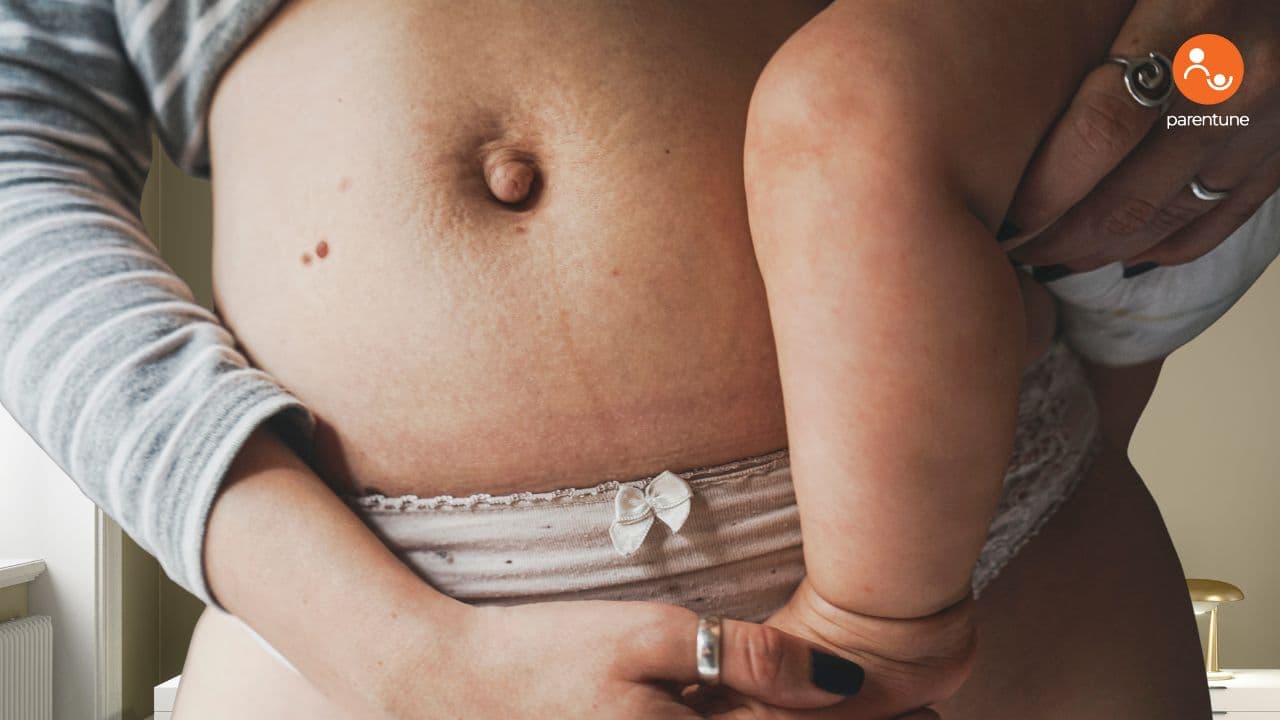
What’s Not Normal? Warning Signs To Watch For
Not all postpartum bleeding is healthy.
Reach out to your doctor if:
-
Your bleeding becomes heavier instead of lighter
-
You soak through a pad in under an hour
-
Clots are larger than a golf ball
-
There's a foul smell
-
You feel dizzy, weak, or have a rapid heartbeat
-
Fever accompanies the bleeding
These could signal an infection, retained placenta, or secondary postpartum hemorrhage.
Don’t wait it out. Your health matters just as much as your baby’s.
Does The Type Of Delivery Affect Bleeding?
Yes, but not how you might expect.
-
Vaginal delivery often leads to more immediate bleeding.
-
C-section moms may have slightly less bleeding at first (since some of the uterine lining is removed surgically), but still experience lochia.
Regardless of delivery type, everyone bleeds.
And recovery is still deeply personal.
What About Bleeding After 6 Weeks?
At 6 weeks, bleeding should be gone or close to it.
But spotting can return if:
-
You’re doing more physical activity than before
-
You just resumed sex
-
Your period is returning (especially if you’re formula-feeding or combo feeding)
Still bleeding heavily past 6 weeks? Check in with your healthcare provider.
Recommended readings:
When Will My Period Come Back?
The return of your menstrual cycle depends mostly on feeding style.
-
Exclusively breastfeeding? Your period might stay away for months.
-
Formula feeding? Your period could return as early as 6–8 weeks.
But ovulation can happen before your first period. So yes, you can get pregnant during this time.
How To Manage Bleeding Comfortably
Here’s what works best:
-
Use pads only. Tampons and menstrual cups can introduce bacteria and irritate healing tissue.
-
Change pads often. Every 3–4 hours is a good rule of thumb.
-
Rest when you can. Too much movement early on can increase bleeding.
If you’re unsure what’s normal, you're not alone. That’s where community matters.
The Parentune Perspective: You Don’t Have To Guess Alone
Bleeding after birth isn’t just physical—it’s emotional too.
Especially when you’re juggling newborn care, sleep deprivation, and healing. That’s why at Parentune, thousands of moms share their real postpartum journeys—what worked, what didn’t, and when they asked for help.
The takeaway? No two recoveries are identical. But understanding what’s normal gives you back a sense of control.
And that changes everything.
Final Thought: It’s A Process, Not A Problem
Bleeding after birth is part of the healing story.
Not something to fear. Not something to ignore.
Like all things postpartum, it’s better understood with the right information, and a little support.
And that’s where Parentune can be your go-to guide—with expert-verified insights and a community that listens without judgment.
Your All-In-One Baby Toolkit
Monitor milestones, growth, and discover unique baby names easily




Be the first to support
Be the first to share